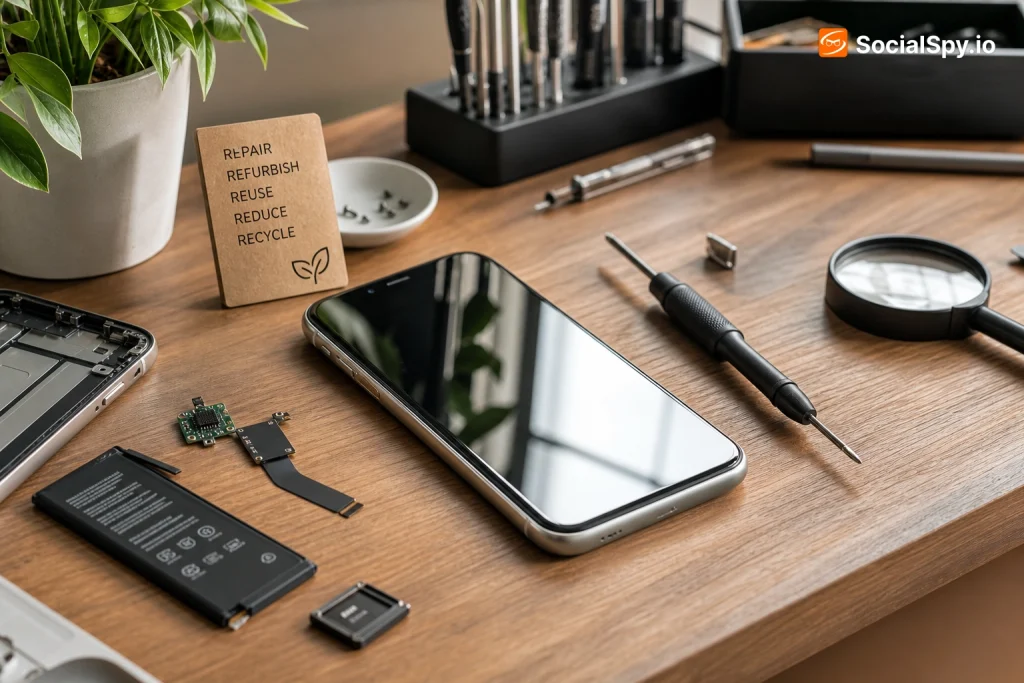
Refurbished phone sales are projected to hit $140 billion globally by 2026, according to estimates from the Global System for Mobile Communications Association (GSMA), as inflation-weary consumers look for ways around $1,000-plus flagship price tags. But “refurbished” is a loosely policed word, and the difference between a great deal and a scam often comes down to who’s selling it and what grading system they actually follow.
What “Refurbished” Actually Means (And Why It Varies Wildly)
There’s no federal legal standard in the US that defines “refurbished” the way there is for “organic” food or “USDA Prime” beef. That gap means the word gets stretched by sellers with very different quality controls.
At the top end, manufacturer-certified refurb programs replace the battery if it’s below a set health threshold, swap the outer glass and casing, and run the device through dozens of diagnostic checks. At the bottom end, some third-party sellers just wipe the phone, slap a new screen protector on it, and call it refurbished even if the battery is at 74% health and the charging port is loose.
- Manufacturer Certified Refurbished – Apple, Samsung, and Google’s own programs; highest quality bar, includes a fresh battery in most cases.
- Certified Pre-Owned (carrier programs) – Verizon Certified Pre-Owned, AT&T Certified Restored; tested by the carrier, usually 90-day to 1-year warranty.
- Third-party graded refurb – Back Market, Gazelle, Decluttr; uses A/B/C cosmetic grading, varies by vendor within the platform.
- “Refurbished” on general marketplaces – eBay or Facebook Marketplace listings from individual sellers with zero standardized testing; buyer beware territory.
A phone graded “Excellent” on Back Market and a phone graded “Excellent” on a random eBay storefront are not the same product — the grading scale is a suggestion, not a law.
The Real Risks: Battery Health, Blacklisted IMEIs, and Counterfeit Parts
The single biggest hidden risk isn’t cosmetic damage — it’s what you can’t see. Three issues account for the vast majority of refurbished phone complaints filed with the Better Business Bureau and on consumer forums like Reddit’s r/Refurbished.
Battery Degradation
Lithium-ion batteries lose roughly 20% of their capacity after 500 full charge cycles, which most heavily used phones hit within 18-24 months. A refurbished iPhone 13 sold with an 82% battery health rating will noticeably struggle by screen-on time standards, even though it “works fine” out of the box.
Blacklisted or Financed IMEIs
Every phone has a unique IMEI number, and carriers maintain shared blacklists (via the GSMA’s Device Registry) for phones reported stolen or still under an active installment plan. Buy one of these and your phone can get remotely shut off weeks later — a problem that has spiked with financed devices resold before the loan is paid off.
Counterfeit or Salvaged Internal Parts
iFixit’s teardown reports have repeatedly flagged non-OEM screens and batteries in cheap refurbished units, sourced from salvage yards in Shenzhen. These parts can cause Face ID failures, screen flickering, or in rare cases, battery swelling.
- Check IMEI status before buying using free tools like Swappa’s IMEI checker or CTIA’s stolen phone checker.
- Ask for battery health percentage in writing — reputable sellers disclose this upfront.
- Request the original grading report if buying from a platform like Back Market or Decluttr.
Where to Actually Buy One: A Side-by-Side Comparison
Not all refurb retailers operate the same way, and the differences matter more than the price tag alone. Here’s how the major players stack up heading into 2026.
| Retailer | Warranty | Battery Guarantee | Return Window |
|---|---|---|---|
| Apple Certified Refurbished | 1 year (AppleCare+ eligible) | New battery included | 14 days |
| Samsung Certified Re-Newed | 1 year | 80%+ minimum | 15 days |
| Amazon Renewed Premium | 90 days (Amazon-backed) | Not always disclosed | 90 days |
| Back Market | Varies by seller (6-12 months typical) | 80%+ minimum, disclosed | 30 days |
| Gazelle | 30 days | Disclosed at “Good” grade or higher | 30 days |
| Swappa | None (peer-to-peer) | Seller-reported only | None (PayPal buyer protection only) |
Apple’s own refurbished store remains the gold standard for iPhones because it replaces the battery and outer shell on nearly every unit, and the device ships in a box nearly identical to new inventory. Samsung’s Re-Newed program has closed much of that gap over the past two years, especially for Galaxy S23 and S24 models now flowing into the refurb pipeline.
How Much You Actually Save (With Real 2026 Numbers)
The savings on refurbished phones are real, but they’re not always as dramatic as marketing suggests once you factor in warranty gaps and battery replacement costs down the line.
- iPhone 15 Pro (128GB): New price around $999; Apple Certified Refurbished typically runs $829-$869, a savings of roughly 13-17%.
- Samsung Galaxy S24 (256GB): New around $799; Samsung Re-Newed or Back Market “Excellent” grade runs $549-$599, a savings closer to 25-30%.
- Google Pixel 8 Pro: New around $999; refurbished units on Back Market or Gazelle land around $599-$650, savings near 35-40%.
- iPhone 12 (older model, still supported through iOS 18): Refurbished units now sell for $250-$350, making them the best value entry point for budget buyers in 2026.
Older flagship models depreciate faster in the refurb market than newer ones because resale demand shifts toward whatever’s one or two generations behind current. That’s why an iPhone 12 or Galaxy S22 refurbished unit often represents the single best dollar-per-feature ratio available right now.
Security and Software Support: The Part Most Buyers Forget
A phone can look flawless and still be a security liability if it’s aging out of software updates. This matters more in 2026 than it did five years ago because both Apple and Google have extended — but not unlimited — support windows.
- Apple generally supports iPhones with iOS updates for about 6-7 years from release; the iPhone 11 (2019) is expected to lose major iOS updates around 2026.
- Google now guarantees 7 years of OS and security updates for Pixel 8 and later models, a policy shift announced in 2023 that changed the refurb calculus for Android buyers.
- Samsung offers 7 years of security updates on Galaxy S24 and newer, but only 4 years on many mid-range A-series phones.
Buying a refurbished phone that’s already near the end of its update cycle is arguably the biggest overlooked risk — not because the hardware fails, but because it stops receiving critical security patches while you’re still using it daily for banking apps and two-factor authentication.
Rule of thumb: if a refurbished phone is more than 4 years old and isn’t from Google’s Pixel 8+ lineup, check the manufacturer’s official support page before buying — not the seller’s listing.
Red Flags That Should Make You Walk Away
Certain warning signs correlate strongly with bad refurb purchases, based on patterns reported across BBB complaints and consumer electronics forums.
- No IMEI provided before purchase — legitimate sellers share this on request, no exceptions.
- Price is more than 50% below the certified refurb price for the same model and storage — often a sign of a financed or blacklisted device, or one with a cracked internal logic board masked by a case.
- Seller has been active less than 6 months on marketplace platforms with no return history.
- “Refurbished” listing with stock photos only and no actual unit photos of the specific device you’d receive.
- No mention of battery health percentage anywhere in the listing description.
A useful gut check: cross-reference the listed price against Back Market’s published average for that exact model, storage size, and grade. If it’s dramatically cheaper, assume there’s a reason and ask direct questions before paying.
Conclusion: Buy the Certification, Not Just the Price
A refurbished phone in 2026 is genuinely safer to buy than it was even three years ago, thanks to standardized grading from platforms like Back Market and stronger manufacturer-backed programs from Apple and Samsung. The technology to verify battery health, IMEI status, and software support windows is now free and accessible to any buyer willing to spend five minutes checking before purchasing.
The real determining factor isn’t whether refurbished phones as a category are trustworthy — it’s whether you’re buying from a source that has skin in the game if something goes wrong. Certified refurbished programs with real warranties consistently outperform peer-to-peer marketplace listings on every metric that matters: battery life, IMEI cleanliness, and post-purchase support.
Skip the too-good-to-be-true listing on a marketplace with no seller history, and instead anchor your decision to Apple Certified Refurbished, Samsung Re-Newed, or a highly-rated Back Market seller. That single choice eliminates roughly 90% of the actual risk associated with buying used electronics.
Frequently Asked Questions
Is a refurbished iPhone as good as a new one?
For most everyday use, yes — Apple Certified Refurbished iPhones include a new battery and outer shell, run full diagnostics, and carry the same 1-year warranty as new units, with the main difference being you won’t get the sealed retail box or AppleCare+ default enrollment.
How do I check if a refurbished phone’s IMEI is clean before buying?
Use a free IMEI checker like Swappa’s ESN/IMEI Checker or the CTIA’s stolen phone database — enter the 15-digit IMEI (found in Settings or on the box) to confirm it isn’t blacklisted or still tied to an active carrier installment plan.
What’s a fair battery health percentage for a refurbished phone?
Look for 85% or higher on iPhones (visible in Settings > Battery > Battery Health) and confirm any Android refurb explicitly states battery capacity, since anything below 80% will noticeably underperform within a year of daily use.