iPhone 14 Plus Battery Basics
The iPhone 14 Plus effectively took over the "big screen, standard price" spot that the Mini line used to fill from the other direction - instead of a small phone with a small battery, Apple went with a large phone carrying one of the biggest batteries it has ever put in a non-Pro iPhone. If you're wondering whether your 14 Plus needs a new battery, its unusually large starting capacity actually makes that easier to judge than on most other models.
What Made the iPhone 14 Plus Special
The 14 Plus filled a gap Apple created by discontinuing the Mini line - a large 6.7" screen at the standard iPhone price, without needing to pay for Pro features. It carries the same core hardware as the standard 14 (chip, cameras, display technology) but in a bigger body with a noticeably larger battery, making it the best all-day-battery option in the 14 lineup for anyone who didn't want to pay Pro pricing.
How the iPhone 14 Plus Battery Ages
A bigger battery doesn't age differently at the chemical level - it's still a lithium-ion cell rated for roughly 500 full charge cycles before capacity drops meaningfully below its original number. What the larger capacity does change is how obvious degradation feels day to day. On a small-battery phone, losing 20% of capacity might mean the difference between finishing a day and not; on the 14 Plus's much larger cell, that same 20% loss is easier to not notice at first, because there was so much headroom to begin with. That's worth knowing if you're trying to judge your 14 Plus by feel rather than checking the actual percentage - it can hide real wear longer than most iPhones.
Signs You Need a Replacement
Because the 14 Plus starts with so much capacity, a unit that's genuinely struggling to get through a normal day - not a heavy-use day, a normal one - has usually lost a substantial chunk of its original battery, more than the same symptom would suggest on a smaller iPhone. Battery Health below 80% and unexpected shutdowns are still the clearest, most reliable signs either way, and worth checking directly (Settings, then Battery, then Battery Health & Charging) rather than guessing from how the day felt.
What a Replacement Costs
As a standard (non-Pro) model, the 14 Plus typically costs less to service than the 14 Pro, closer to what the regular 14 costs despite its larger battery - the size difference doesn't significantly change the labor or part cost. In-warranty or AppleCare+ coverage with Battery Health under 80% makes it free; outside that, independent shops are usually the cheapest option, with Apple and authorized providers costing more but including genuine parts and a service warranty.
DIY vs. Professional Replacement
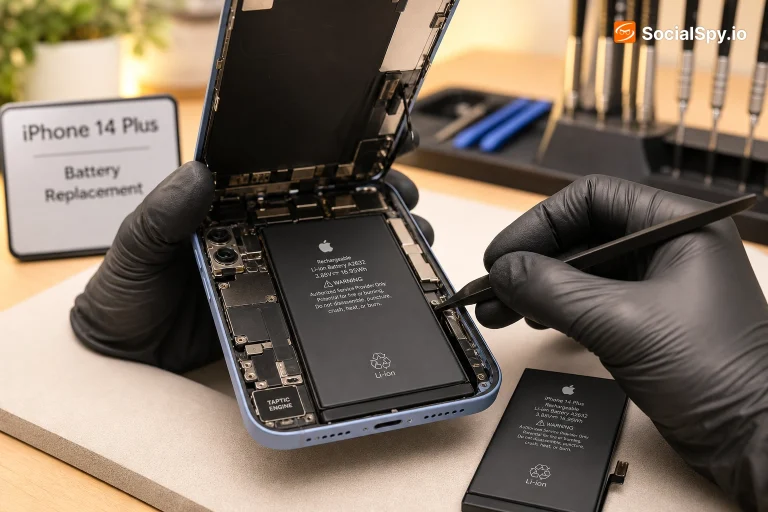
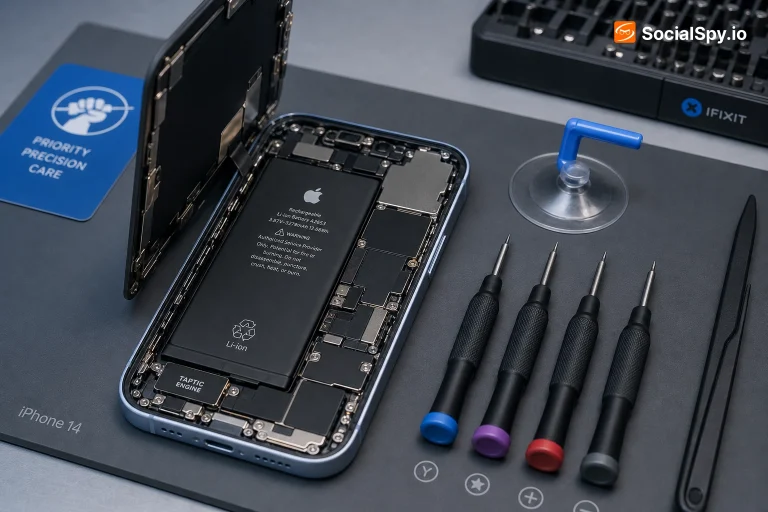
The 14 Plus uses the same stretch-release adhesive strip system as every recent iPhone, and its larger body actually gives you slightly more room to work compared to the tightly packed Pro models - that doesn't make it easy, but it's a somewhat more forgiving DIY candidate than a 14 Pro if you're comfortable with the general process. The usual cautions still apply: a snapped adhesive strip is common and manageable with patience and isopropyl alcohol, but a punctured cell from levering too hard with a metal tool is a genuine safety risk, not just a cost one.
Tips to Make It Last Longer
With this much battery capacity to begin with, the 14 Plus doesn't need aggressive battery-saving habits the way a Mini or SE does - the bigger lever here is protecting long-term health rather than squeezing out daily runtime. Keeping the phone out of prolonged heat (parked cars, direct sun) matters more for long-term capacity than any charging habit. Optimized Battery Charging, on by default, reduces the time the phone spends sitting at 100%, which is one of the more stressful states for a lithium-ion cell - leaving it on is a simple way to slow wear without changing how you use the phone.
Is the iPhone 14 Plus Still Worth It in 2026?
For 2026, the 14 Plus is a strong practical choice if you value screen size and battery life over camera or display extras - it's essentially a 14 with more of everything that matters for daily use. Check Battery Health before buying used, since that's the main wear point at this age; the large starting capacity means even a moderately degraded unit should still perform reasonably well compared to smaller iPhones in the same condition.
Frequently Asked Questions
In most real-world use, yes - it carries a noticeably larger battery and doesn't run Always-On display or ProMotion, both of which add power draw on the Pro. The trade-off is fewer camera and display features.
Its unusually large starting capacity means moderate degradation is easier to not notice day to day than on smaller iPhones - check the actual Battery Health percentage rather than judging purely by how the phone feels.
Generally yes - as a standard model it typically costs closer to the regular iPhone 14 than the more complex Pro, despite having a larger cell.
It can take somewhat longer to reach 100% from empty compared to smaller iPhones, though fast charging (with a compatible adapter) narrows that gap considerably for the first 50%.