iPhone Se Battery Basics
The iPhone SE (2nd generation) reused the iPhone 8's compact body and battery, but paired it with the A13 Bionic chip from the iPhone 11 generation - a genuinely unusual combination of older, smaller battery hardware driving noticeably newer, more capable silicon.
What Made the iPhone Se Special
The iPhone SE (2020) was Apple's answer to demand for a smaller, cheaper iPhone with modern internals - it reused the iPhone 8's exact chassis and Touch ID home button, but paired it with the A13 Bionic chip from the iPhone 11 generation, making it genuinely fast despite its budget price and older design.
How the iPhone Se Battery Ages
That mismatch is part of why some SE owners notice shorter battery life than the phone's compact size alone would explain: the A13 is simply a more powerful chip than what the 8's original battery was designed around, and more powerful chips draw more power under load, particularly for anything demanding like gaming or video. Underneath that, the actual battery cell ages the same way every iPhone's does - it's rated to hold at least 80% of its original capacity through roughly 500 full charge cycles, with calendar time and heat mattering just as much as charge frequency.
Signs You Need a Replacement
Given the SE's smaller starting capacity, moderate day-to-day drain on lighter use is fairly normal - the more reliable way to know if it's genuinely time for a new battery is checking Battery Health directly (Settings, then Battery, then Battery Health & Charging) rather than judging from a general "doesn't last as long as I'd like" feeling. A reading below 80%, or the phone shutting down unexpectedly while charge is still showing, are the clearer signs.
What a Replacement Costs
As Apple's budget iPhone, the SE typically costs less to service than any other current model, thanks to its smaller battery and simpler, older chassis design shared with the iPhone 8. In-warranty or AppleCare+ coverage with Battery Health under 80% makes it free; outside that, independent shops usually offer the most affordable pricing for this model specifically, since the parts and process are well-established after years of the same design.
DIY vs. Professional Replacement
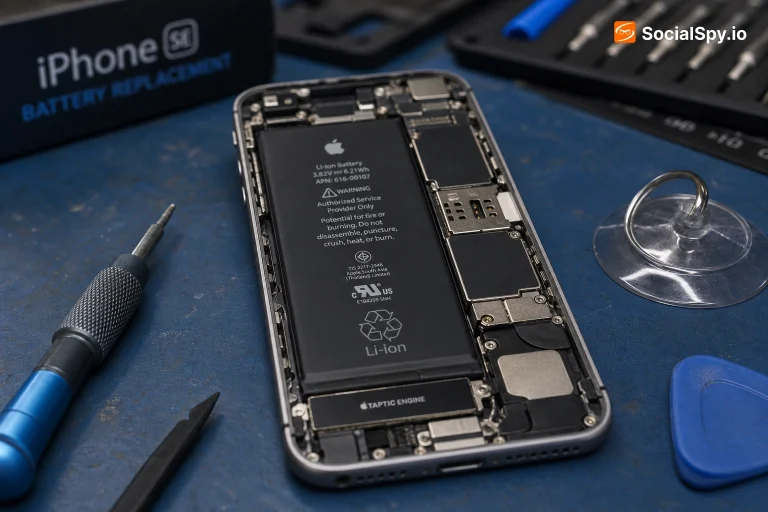
The SE's battery mounting is the same stretch-release adhesive system used across the modern iPhone lineup, inherited from the iPhone 8's design, and its relatively simple internal layout (fewer cameras, no advanced sensors competing for space) makes it one of the more approachable iPhones for a DIY attempt. The usual caution still applies: a punctured cell from forcing a metal tool near the battery is a genuine safety risk, so patience with the adhesive strips and the right tools matter more than speed.
Tips to Make It Last Longer
Given the SE's smaller battery and more power-hungry chip, being deliberate about background app refresh and screen brightness helps more here than on a larger iPhone - Settings, then General, then Background App Refresh is worth reviewing if battery life feels tight. Low Power Mode is genuinely useful to lean on more often with this model than a larger-battery iPhone. Beyond that, the standard advice applies: avoid heat exposure, and leave Optimized Battery Charging enabled to slow long-term wear.
Is the iPhone Se Still Worth It in 2026?
For 2026, the SE remains a sensible pick if you specifically want Touch ID (rather than Face ID) or a genuinely compact, one-handed phone at a low price. Because it's budget hardware from the start, expect modest battery life even from a fully healthy battery - check Battery Health, but don't expect Pro-level endurance regardless of condition. It remains capable for everyday tasks like messaging, browsing, and basic photography.
Frequently Asked Questions
Very similar in size and capacity, yes - the SE reused the 8's compact chassis. The difference is it pairs that battery with the newer, more powerful A13 Bionic chip, which can draw more power under heavy use than the 8's original A11 did.
The SE's battery capacity is genuinely smaller than most other recent iPhones, inherited from the compact iPhone 8 design - that's expected behavior for the model, separate from any degradation.
Generally yes - it's Apple's budget model with a smaller, well-established battery and simpler internal layout, which tends to keep both parts and labor costs lower than newer, more complex iPhones.
It's a reasonable habit given the SE's smaller battery - it noticeably extends a single charge with minimal day-to-day downside, and there's no long-term harm to leaving it on regularly.