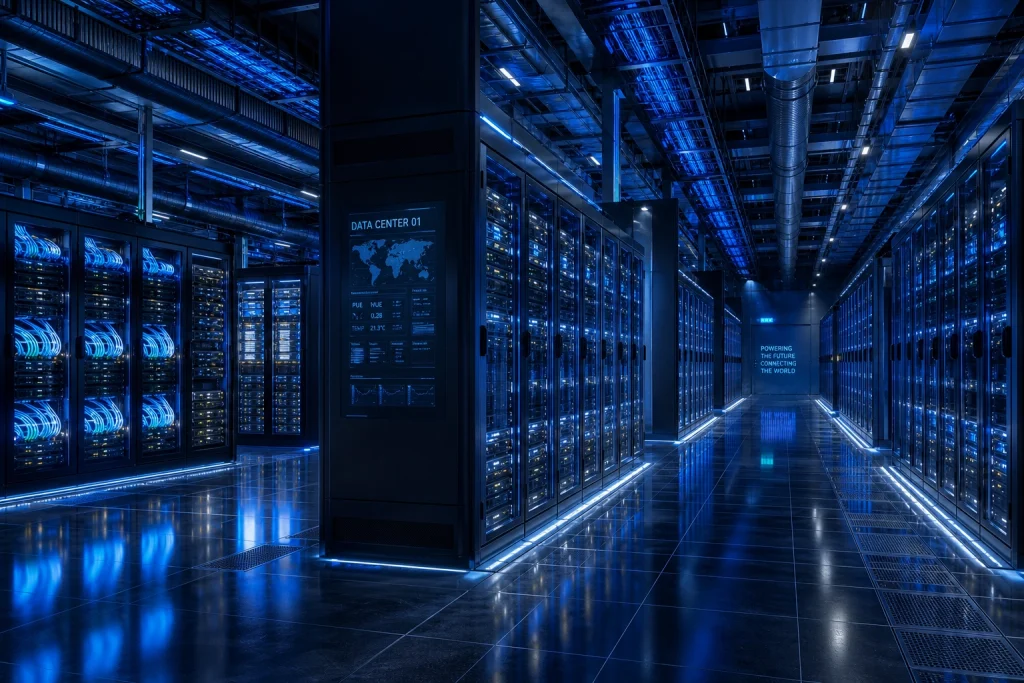
The digital age demands robust and efficient data handling capabilities, and big tech companies are at the forefront of this evolution. As the demand for cloud services, artificial intelligence, and data analytics grows, these companies are investing heavily in data center infrastructure. This article explores how major tech corporations are shaping the future with their data center investments.
The Importance of Data Centers
Data centers are the backbone of the digital economy, providing the necessary infrastructure for storing, processing, and distributing data. With the exponential growth of internet usage, cloud computing, and IoT devices, the role of data centers has become more critical than ever.
Big tech companies are investing in data centers to support a range of services:
- Cloud Services: Providing scalable and reliable cloud storage and computing power.
- Artificial Intelligence: Hosting AI models and processing large datasets efficiently.
- Content Delivery: Ensuring fast and reliable delivery of content worldwide.
- Data Security: Implementing robust security measures to protect sensitive information.
Key Players and Their Strategies
Several big tech companies are leading the charge in data center investment. Each has developed unique strategies to expand and optimize their infrastructure.
Amazon Web Services (AWS)
Amazon Web Services is a leading cloud service provider and has a significant investment in data centers. AWS focuses on building a global network of data centers known as availability zones, which allows them to provide services with high availability and reliability. Their strategy includes:
- Geographic Expansion: Continuously expanding their network to new regions to reduce latency and meet local data residency requirements.
- Innovation in Cooling and Energy Efficiency: Implementing advanced cooling technologies and renewable energy sources to minimize the environmental impact of their data centers.
Google Cloud
Google Cloud is another major player in the data center infrastructure space. Google has a strong focus on sustainability and efficiency, which is reflected in their data center investments:
- Renewable Energy Commitment: Achieving carbon neutrality and powering their data centers with 100% renewable energy.
- Custom Hardware and AI: Utilizing custom hardware and artificial intelligence to optimize data center operations and improve performance.
Microsoft Azure
Microsoft Azure has made significant strides in establishing a global presence through its data centers. Their approach emphasizes:
- Hybrid Cloud Solutions: Offering flexible solutions that integrate on-premises and cloud resources seamlessly.
- Sustainability Goals: Committing to becoming carbon negative and focusing on sustainable data center designs.
Trends in Data Center Investments
The strategies employed by big tech companies reflect broader trends in the industry:
- Edge Computing: As latency becomes increasingly important, companies are investing in edge data centers to bring computing power closer to end-users.
- Modular Data Centers: The use of modular data centers allows for scalability and rapid deployment, which is crucial for meeting growing demand.
- Advanced Cooling Solutions: To reduce energy consumption, companies are exploring advanced cooling techniques such as liquid cooling and free air cooling.
These trends indicate a shift towards more efficient, scalable, and sustainable data center infrastructures.
Conclusion
Big tech companies are making substantial investments in data center infrastructure to keep pace with the increasing demand for digital services. By leveraging innovative technologies and focusing on sustainability, these companies are not only enhancing their capabilities but are also setting new standards for the industry. As the digital landscape continues to evolve, the role of data centers will only grow in importance, making these investments critical for the future.
FAQs
What is the primary purpose of a data center?
Data centers are facilities used to house computer systems and associated components, such as telecommunications and storage systems. They provide essential services such as data storage, processing, and distribution, enabling cloud services, AI, content delivery, and data security.
How do data centers impact the environment?
Data centers can have a significant environmental impact due to their high energy consumption and cooling requirements. However, many companies are investing in renewable energy sources and innovative cooling solutions to mitigate their environmental footprint.
Why are big tech companies focusing on edge computing?
Edge computing reduces latency by bringing data processing closer to the data source or end-user. This is crucial for applications requiring real-time data processing, such as IoT devices, autonomous vehicles, and virtual reality. By investing in edge data centers, companies can enhance performance and provide better services to users.