Apple’s camera lineup has gotten confusing enough that even longtime iPhone owners struggle to explain the difference between the standard, Pro, and Pro Max models. With the iPhone 17 lineup now on shelves alongside discounted 16 and 15 series phones, picking the right camera system means understanding sensor sizes, sensor-shift stabilization, and telephoto reach — not just megapixel counts.
The Current iPhone Camera Lineup, Ranked
Apple currently sells five distinct camera configurations across the active iPhone lineup, and the gap between the cheapest and most expensive setups is larger than most people realize. It’s not just about resolution — it’s about how many lenses you get, how big the sensors are, and how much computational photography muscle sits behind them.
Here’s how the current models stack up:
| Model | Main Sensor | Telephoto | Best For |
|---|---|---|---|
| iPhone 17 Pro Max | 48MP Fusion | 48MP, 8x tetraprism | Zoom shooters, video pros |
| iPhone 17 Pro | 48MP Fusion | 48MP, 8x tetraprism | Same as Max, smaller body |
| iPhone 17 | 48MP Fusion | None (2x crop) | Everyday shooters on a budget |
| iPhone 16e | 48MP Fusion | None | Single-lens simplicity |
| iPhone Air | 48MP Fusion | None (2x crop) | Thin design over versatility |
Industry camera reviewers consistently note that the jump from the standard iPhone to the Pro models isn’t about sharper everyday photos — it’s almost entirely about optical flexibility: ultra-wide macro shots and true telephoto reach that no software crop can replicate.
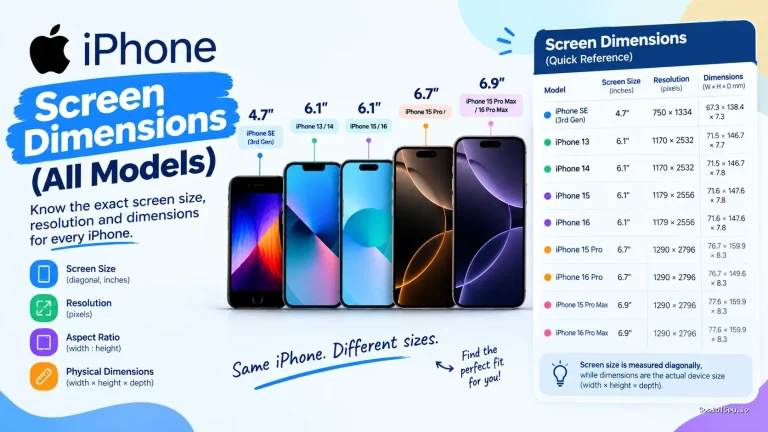
If you’re also weighing screen size against camera capability, it’s worth checking out our breakdown of which iPhone has the largest screen, since the Pro Max body that houses the best camera also happens to carry Apple’s biggest display.
Why the 17 Pro Max Wins: The Telephoto Advantage
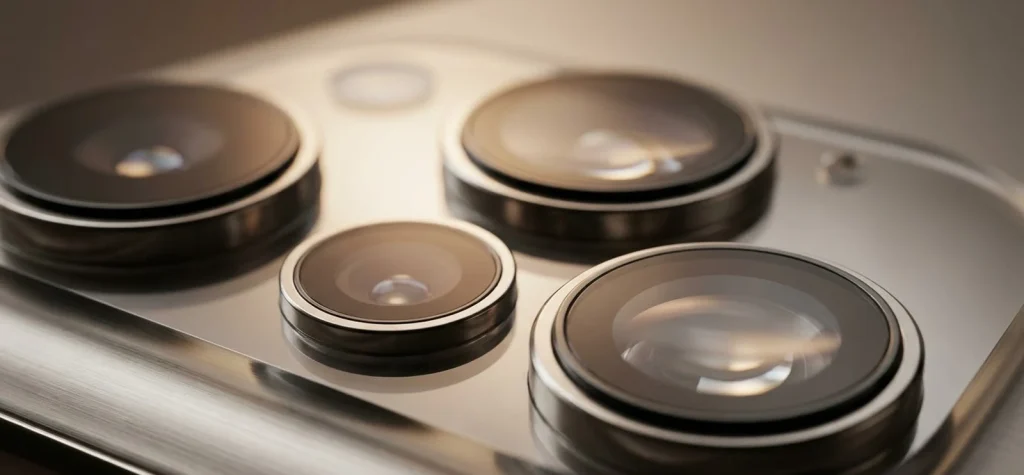
The single biggest differentiator this generation is the tetraprism telephoto lens, which Apple first introduced on the iPhone 15 Pro Max and has now upgraded to a full 48MP sensor on the 17 Pro and Pro Max. Previous tetraprism lenses topped out at 12MP, so this is a meaningful leap in cropping flexibility and low-light telephoto performance.
What that means practically:
- 8x optical-quality zoom with far less noise than the old 5x setup, useful for concerts, wildlife, and school sports from the sidelines
- 48MP capture at telephoto range, letting you crop into a shot after the fact without the mushy detail loss older iPhones suffered
- Improved macro photography achieved via the ultra-wide lens working in tandem with the new sensor stack, not a dedicated macro lens
- Better subject isolation for portraits shot at longer focal lengths, since compression at 8x creates more natural background blur than digital zoom fakery
The non-Pro iPhone 17 still relies on a 2x optical-quality crop from its main sensor rather than a dedicated telephoto lens. That’s genuinely fine for portraits and moderate zoom, but it falls apart past 3x-4x, where images get visibly soft.
What Stayed the Same
Both Pro models and the standard iPhone 17 now share the same 48MP main sensor generation, which is a notable equalizer compared to past years. The difference in daylight, wide-angle shots between a $799 iPhone 17 and a $1,199 iPhone 17 Pro Max is smaller than most buyers assume.
Video Still Separates the Pro Models From Everything Else
Photography gets most of the marketing attention, but video capability is where the Pro lineup pulls dramatically ahead — and where a lot of buyers underestimate the gap. Apple has positioned the 17 Pro and Pro Max as genuine filmmaking tools, not just phones that shoot good clips.
Key video advantages on the Pro models:
- ProRes RAW recording direct to external SSDs via USB-C, a feature absent from the standard iPhone entirely
- Genlock support for professional multi-camera productions, aimed squarely at indie filmmakers and content studios
- 4K120fps slow motion across all rear lenses, versus more limited frame rate options on the standard model
- Dual Capture, letting you record from the front and back camera simultaneously — handy for reaction-style content creators
- Better thermal management, meaning the Pro Max can sustain 4K60 ProRes recording longer before throttling, thanks to its larger chassis and vapor chamber cooling
If you’re a hobbyist who mostly posts to Instagram and TikTok, none of this will matter much. If you’re building a YouTube channel or shooting client work, the Pro Max’s video toolkit alone justifies the price gap over the base model.
Low-Light Performance: Where Sensor Size Actually Matters
This is the category where raw specs meaningfully translate to real-world results, and it’s also the most misunderstood. A bigger sensor doesn’t just mean more resolution — it means each individual pixel captures more light, which is the entire game after sunset.
Apple’s Photonic Engine, combined with sensor-shift optical image stabilization on every current model, does a lot of computational heavy lifting. But hardware still sets the ceiling:
- The iPhone 17 Pro Max has the largest sensor area of any current iPhone, giving it a visible edge in dimly lit restaurants, concerts, and astrophotography mode
- The iPhone 17 performs nearly as well in low light on the main lens specifically, since it shares the same sensor generation
- The iPhone 16e, Apple’s budget model, noticeably lags in low light due to an older image signal processor and the absence of a second rear lens to assist with depth data
- Night mode portrait shots benefit most from the Pro Max’s larger sensor, since portrait blur calculations rely on accurate depth mapping that’s harder to get right in dim conditions
Anyone considering the budget-friendly route should know exactly what they’re trading away. Our deep dive on iPhone 16e battery replacement costs is worth a read too, since that phone’s appeal is largely about long-term affordability rather than flagship camera performance.
Older iPhones: Is It Worth Upgrading Just for the Camera?
Plenty of readers aren’t choosing between this year’s models — they’re deciding whether to finally retire an iPhone 12, iPhone 11, or an iPhone XS. The camera improvement curve over the last several generations has actually been steep, even if it doesn’t always feel that way year to year.
The Multi-Generation Jump
Consider what’s changed since the iPhone 11 Pro launched:
- Main sensor resolution jumped from 12MP to 48MP
- Night mode went from a novel feature to an always-on, computationally blended default
- Telephoto reach went from 2x optical to 8x optical-quality on the Pro Max
- ProRAW and ProRes formats didn’t exist at all on the 11-series
- Action mode video stabilization, unavailable on anything before the iPhone 13, now rivals dedicated gimbals for casual use
A five-year-old iPhone can still take a technically sharp photo in good light. It falls apart specifically in low light, fast motion, and anything requiring zoom — exactly the situations where computational photography advances matter most.
If your current phone’s camera is the main pain point but the battery is the actual reason you’re considering replacement, it’s worth pricing out a battery swap first. Guides on iPhone 11 Pro Max battery replacement, iPhone 11 Pro battery replacement, and iPhone XS battery replacement all show that a $89-$99 battery service often buys another two years of solid daily use — even if the camera stays behind the times.
When a Battery Fix Isn’t Enough
That said, a fresh battery won’t fix an outdated sensor. If you’re shooting a lot of low-light social content, sports, or travel photography, the camera gap between an iPhone XR-era device and the iPhone 17 Pro Max is large enough that no software update will close it. Checking iPhone XR battery replacement costs is smart due diligence, but treat it as a bridge decision, not a permanent one, if photography is a priority for you.
Real-World Scenarios: Matching the Camera to Your Life
Spec sheets don’t tell the whole story. Here’s how the current lineup actually performs for specific use cases people care about.
Travel and landscape photography: The ultra-wide lens matters more here than the telephoto. Every current iPhone from the 16e up has a competent ultra-wide, but the Pro models add better edge distortion correction and higher resolution capture on that lens specifically.
Parents documenting kids and pets: Fast-moving subjects benefit enormously from the Pro Max’s improved autofocus speed and the 8x telephoto for capturing action from a distance without disturbing the moment. The standard iPhone 17 is a perfectly capable second choice here.
Content creators and small business owners: ProRes video, external SSD recording, and Dual Capture make the Pro and Pro Max the obvious pick. The premium is easily justified if the phone is a business tool generating income, not just a personal device.
Budget-conscious everyday users: The iPhone 16e delivers genuinely good photos for the price, provided you’re shooting mostly in daylight and don’t need a telephoto lens. Just go in aware of its low-light and zoom limitations — and know that if the battery degrades over time, a replacement is far cheaper than a new phone.
Minimalists who dislike zoom cameras entirely: Some users specifically prefer the single-lens simplicity and thinner profile of models like the iPhone Air or 16e, trading zoom flexibility for a lighter phone in the pocket. That’s a legitimate tradeoff, not a compromise everyone needs to avoid.
Conclusion
There’s no universal “best” iPhone camera divorced from how you actually shoot. For anyone who zooms often, shoots in low light, or wants professional-grade video tools, the iPhone 17 Pro Max is unambiguously the top performer this generation, largely because of its 48MP tetraprism telephoto and superior sensor size. But the standard iPhone 17 closes the daylight-photography gap so effectively that paying the Pro premium purely for “sharper regular photos” isn’t a good use of money — the extra cost only pays off if you specifically need the zoom, the video toolkit, or the low-light ceiling that comes with the bigger sensor. And if your existing iPhone’s camera already satisfies you but its battery doesn’t, a $70-$100 battery replacement is almost always the smarter financial move before jumping to a new flagship.
FAQ
The iPhone 17 Pro Max has the best overall camera system currently available, primarily due to its 48MP tetraprism telephoto lens offering 8x optical-quality zoom and its larger sensor that improves low-light and portrait performance beyond what any other current iPhone can match.
Yes, meaningfully — while both share the same 48MP main sensor generation and produce similar results in good daylight, the Pro model adds a dedicated telephoto lens with true 8x zoom, ProRes video recording, macro photography, and better sustained video performance that the standard iPhone 17 simply doesn’t have.
It depends on what you shoot: if you mainly take photos in good lighting and don’t zoom much, an older iPhone from the 12 or 13 series is still perfectly usable, but if you frequently shoot in low light, need real zoom, or want modern video features, the improvements in recent models are substantial enough to justify upgrading rather than just replacing the battery.