The question “which iPhone has the largest screen” sounds simple, but the answer has shifted almost every year since Apple abandoned its one-size-fits-all approach back in 2014. In 2026, the lineup includes four distinct display sizes across the iPhone 17 family, and the gap between the biggest and smallest is now nearly a full inch diagonally.
The Current Title Holder: iPhone 17 Pro Max
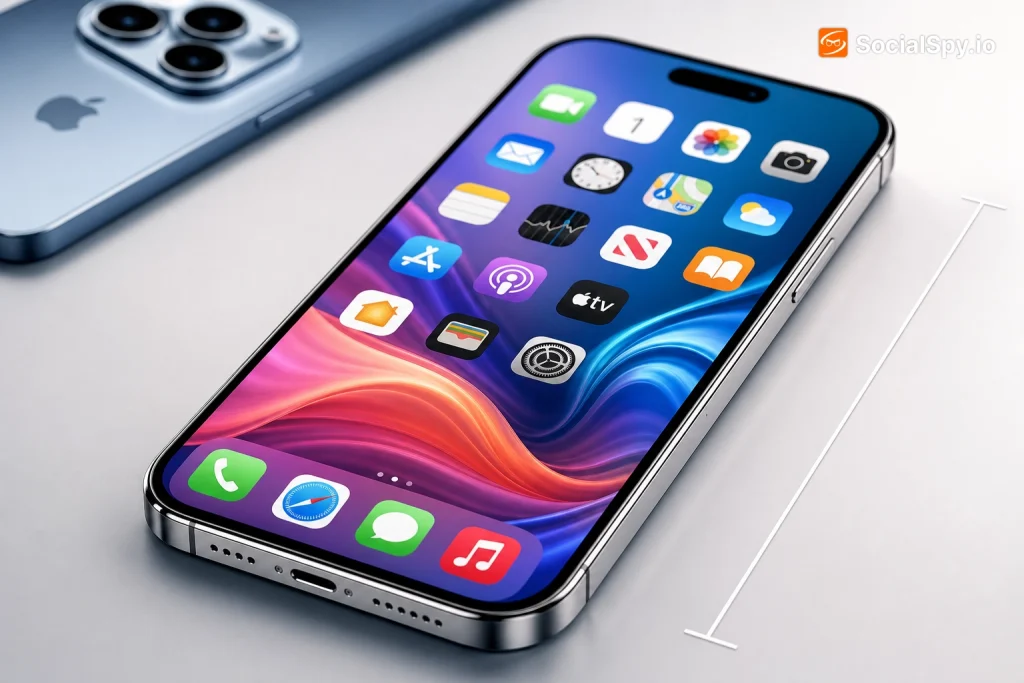
Apple’s biggest phone screen right now belongs to the iPhone 17 Pro Max, released in September 2025 and still the flagship as of this writing. Its 6.9-inch OLED panel uses Apple’s ProMotion technology with adaptive refresh rates up to 120Hz, and it’s built around the same LTPO panel architecture Apple has refined since the iPhone 13 Pro generation.
Here’s how the numbers break down for the current flagship:
| Spec | iPhone 17 Pro Max |
|---|---|
| Screen size | 6.9 inches diagonal |
| Resolution | 2868 x 1320 pixels |
| Pixel density | ~460 ppi |
| Peak brightness (outdoor) | 3,000 nits |
| Refresh rate | 1-120Hz ProMotion |
That resolution and brightness combination makes it one of the sharpest, most legible phone screens on the market — brighter in direct sunlight than the iPhone 15 Pro Max was just two generations ago. Samsung’s Galaxy S26 Ultra edges it out slightly on raw pixel density, but Apple’s color calibration and True Tone consistency remain a differentiator for photo and video editing on the go.
Screen size hasn’t grown since the iPhone 16 Pro Max — Apple appears to have hit a practical ceiling around 6.9 inches for a phone most people can still use one-handed, at least occasionally.
How iPhone Screens Got This Big
It’s worth remembering how dramatically this has changed. The original iPhone in 2007 shipped with a 3.5-inch display that felt enormous at the time compared to flip phones and BlackBerrys.
The size crept up gradually, then jumped hard once Apple accepted that “phablets” weren’t a fad.
- iPhone (2007) to iPhone 4S (2011): 3.5 inches, unchanged for four generations
- iPhone 5 (2012): 4.0 inches, the first stretch to a taller aspect ratio
- iPhone 6 Plus (2014): 5.5 inches, Apple’s first true “Plus” phablet
- iPhone X (2017): 5.8 inches, first edge-to-edge OLED with the notch
- iPhone 12 Pro Max (2020): 6.7 inches, a size that held steady for years
- iPhone 16 Pro Max (2024): 6.9 inches, the current record
- iPhone 17 Pro Max (2025): 6.9 inches, holding the record into 2026
Notice the pattern: growth wasn’t linear. Apple sat on 6.7 inches for the Pro Max line from 2020 through 2023, then pushed the bezels thinner in 2024 to squeeze out another 0.2 inches without changing the phone’s actual footprint much. That bezel-shrinking trick is largely tapped out now, which is why the screen size froze again for 2025’s iPhone 17 Pro Max.
Screen Size vs. What You Actually See
Raw diagonal measurement is a marketing number, and it can be misleading if you don’t account for cutouts, curves, and aspect ratio.
The Dynamic Island Factor
Every current iPhone, from the entry-level iPhone 17 to the Pro Max, uses the pill-shaped Dynamic Island cutout rather than a notch. It eats a small sliver of usable pixels at the top of the screen, but Apple’s software treats it as an interactive UI element rather than dead space — showing Live Activities, timers, and music controls.
Aspect Ratio Matters Too
A 6.9-inch iPhone and a 6.9-inch Android phone with a different aspect ratio won’t show the same amount of content. iPhones use a taller, narrower 19.5:9-ish ratio (closer to 20:9 on newer models), which favors scrolling apps like Instagram and Safari over widescreen video playback, where you’ll see letterboxing.
- Taller ratio = more visible content when scrolling social feeds and reading
- Wider video content shows black bars unless you zoom or crop
- Narrower body means the phone is still grippable despite the tall screen
The Full 2026 iPhone Lineup, Screen by Screen
Apple currently sells four distinct iPhone 17 models, plus the discounted iPhone 16e for budget buyers, each targeting a different hand size and use case.
| Model | Screen size | Best for |
|---|---|---|
| iPhone 17 | 6.3 inches | Everyday users, best value |
| iPhone Air | 6.5 inches | Thinness and portability fans |
| iPhone 17 Pro | 6.3 inches | Pro camera in a compact body |
| iPhone 17 Pro Max | 6.9 inches | Media, gaming, max battery |
| iPhone 16e | 6.1 inches | Budget-conscious buyers |
A few things jump out from that table. First, the standard iPhone 17 and iPhone 17 Pro now share the exact same 6.3-inch screen size — the only real display differences between them are refresh rate (the Pro gets ProMotion, the base model doesn’t) and peak brightness. Second, the iPhone Air, Apple’s ultra-thin model introduced alongside the 17 lineup, splits the difference at 6.5 inches, prioritizing a 5.6mm thin chassis over sheer screen real estate.
If you’ve ever wondered where certain small typography symbols hide on these different keyboard layouts, it’s a similar story to figuring out where is comma on iPhone — the physical screen size changes how much of the keyboard you see at once, but the layout logic itself stays consistent across every model Apple sells.
The Real Tradeoffs of Buying the Biggest Screen
A bigger screen isn’t a strictly better screen. It comes with real compromises that matter more once the initial excitement of a big display wears off.
Battery and Repair Costs Scale With Size
Larger screens generally pair with larger batteries, which is a genuine upside — the iPhone 17 Pro Max has the longest battery life of any iPhone Apple has ever shipped, rated for up to 39 hours of video playback. But bigger batteries and bigger glass panels also mean pricier repairs when something goes wrong.
- A iPhone 17 Pro battery replacement runs noticeably higher out of warranty than the base model equivalent
- The standard iPhone 17 battery replacement costs less, reflecting its smaller battery cell and simpler internal layout
- Older Pro Max owners looking at an iPhone 16 Pro battery replacement will find pricing has crept up generation over generation as batteries grow
- Even two-generation-old flagships like those needing an iPhone 15 Pro Max battery replacement show the same pattern — bigger phone, bigger bill when the battery degrades
One-Handed Use Gets Harder
At 6.9 inches, the Pro Max measures roughly 6.42 inches tall. Reaching the top corner of the screen one-handed is genuinely difficult for most adult hands, which is why Apple still ships accessibility features like Reachability that slide the whole interface down temporarily.
Weight Adds Up
The iPhone 17 Pro Max weighs in at roughly 227 grams, noticeably heavier than the 165-gram base iPhone 17. Carried in a pocket all day or held up for long video calls, that difference becomes physically noticeable within weeks, not just on day one.
Which Big-Screen iPhone Should You Actually Buy?
Not everyone chasing “biggest screen” actually needs the Pro Max. Here’s a practical breakdown based on real usage patterns rather than spec-sheet bragging rights.
- Buy the iPhone 17 Pro Max if: you watch a lot of video, play graphically demanding mobile games, or use your phone as a primary work device and need the longest possible battery runtime between charges.
- Buy the iPhone Air if: screen size matters less to you than how the phone feels in your hand and pocket — it trades a slightly smaller display for a genuinely thinner, lighter design.
- Buy the standard iPhone 17 if: you want most of the modern iPhone experience — the same 6.3-inch screen as the Pro — without paying the premium for the camera system and titanium-adjacent build.
- Buy the iPhone 16e if: budget is the deciding factor and you’re fine with a smaller 6.1-inch panel and last-generation chip performance.
- Consider a used iPhone 15 Pro or 16 Pro if: you want a taste of the larger-screen experience without paying flagship 2026 pricing, understanding you’ll eventually face a battery replacement decision as the cell ages.
For most buyers who obsess over screen real estate specifically for streaming, gaming, or reading, the jump from 6.3 to 6.9 inches is genuinely noticeable in daily use — it’s not just a marketing number. But for buyers who primarily text, browse social media, and take photos, the difference between the smallest and largest current iPhone matters far less than battery health, camera quality, or price.
Conclusion
The iPhone 17 Pro Max holds the crown for largest iPhone screen in 2026 at 6.9 inches, a size Apple has now kept stable across two full generations after years of steady growth. Screen size increases have clearly slowed as Apple runs into practical limits around one-handed usability, weight, and how much bezel-thinning is realistically left to exploit. The more interesting story for 2026 buyers isn’t which phone is biggest — it’s how Apple has diversified the lineup, giving shoppers four genuinely different size-and-weight tradeoffs instead of forcing everyone into the same phablet mold. If Apple’s next major redesign brings a foldable iPhone, expect this entire size hierarchy to get upended within the next two product cycles.
FAQ
The iPhone 17 Pro Max has the largest screen currently available from Apple, measuring 6.9 inches diagonally with a 2868 x 1320 pixel resolution and ProMotion up to 120Hz. It matches the screen size of the iPhone 16 Pro Max but with brighter peak outdoor visibility.
Yes, slightly — the iPhone Air has a 6.5-inch display compared to the iPhone 17 Pro’s 6.3-inch screen, even though the Air is the thinner and lighter of the two devices overall. The size difference comes from Apple prioritizing a taller, narrower chassis for the Air’s ultra-slim design.
It’s possible but not guaranteed — screen size has plateaued at 6.9 inches for two consecutive generations, suggesting Apple has hit practical limits with current bezel and one-handed-use engineering. Any further growth would likely require a foldable form factor rather than simply stretching the existing glass slab design.