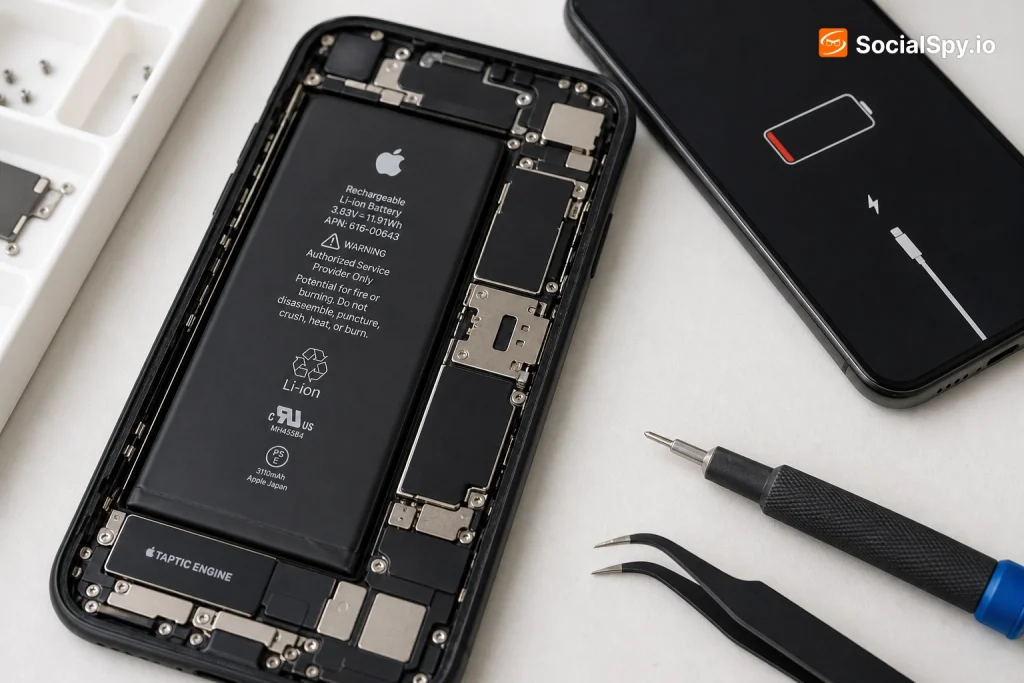
The iPhone 11 launched back in September 2019, which means most units still in circulation are now well past the point where battery degradation becomes noticeable. If your phone can’t make it through a workday without hunting for an outlet, or you’re seeing that dreaded “Maximum Capacity” percentage drop below 80% in Settings, a battery swap is likely the most cost-effective fix you’ll ever make on this device.
How Much Does It Actually Cost
Pricing for an iPhone 11 battery swap varies more than most people expect, and where you go matters just as much as what you’re willing to pay. Apple’s official pricing structure hasn’t moved much since 2019, but third-party competition has pushed independent shop rates down considerably.
Here’s how the main options stack up:
| Service Provider | Price | Turnaround Time |
|---|---|---|
| Apple (out of warranty) | $89 | Same day to 1-2 days |
| Apple (with AppleCare+) | $0 (covered if under 80% health) | Same day to 1-2 days |
| Best Buy (Apple Authorized) | $89 | 1-2 days |
| uBreakiFix by Asurion | $69.99-$89.99 | 45-60 minutes |
| Independent repair shops | $50-$80 | 30-60 minutes |
| DIY kit (iFixit) | $32.95-$45 | 1-2 hours (self-performed) |
Apple only replaces a battery for free under warranty if the battery’s maximum capacity has already dropped below 80% of its original design capacity, which the company considers “service qualifying” degradation. If your battery is at 82% but still annoying you, Apple will charge full price even with AppleCare+ active, since the warranty terms are tied to that specific threshold, not to how you feel about your battery life.
Industry repair analysts note that independent shops have captured significant market share on battery jobs specifically because the repair is low-risk and doesn’t require replacing pentalobe screws under warranty-voiding seals the way screen or logic board work does.
Signs Your iPhone 11 Actually Needs a New Battery
Not every slow iPhone needs surgery. Before paying anyone, check your phone’s actual battery health data, because Apple builds this diagnostic directly into iOS.
To check it yourself: go to Settings > Battery > Battery Health & Charging. This shows your Maximum Capacity percentage, which measures current capacity relative to when the battery was new.
Watch for these specific red flags:
- Maximum Capacity below 80% — this is Apple’s own threshold for recommending replacement, and it’s a reliable number, not marketing fluff
- “Peak Performance Capability” warning appears, indicating iOS has throttled your CPU speed to prevent unexpected shutdowns
- Unexpected shutdowns at 20-30% battery, even though the phone reports charge remaining
- Rapid percentage drops, like losing 15-20% in ten minutes of light use
- Phone feels warm during normal tasks like scrolling social media or texting
- Battery drains overnight even in Airplane Mode with no apps running
Lithium-ion batteries in the iPhone 11 are rated by Apple to retain 80% of original capacity after 500 complete charge cycles. A charge cycle counts as using 100% of your battery’s capacity, whether that’s one full charge from 0-100% or several partial charges that add up to 100%. Most heavy users hit 500 cycles within 18-24 months, which tracks almost exactly with when iPhone 11 owners started reporting battery complaints in online forums around late 2021.
Apple’s Official Repair Process Explained
Going through Apple directly is still the safest bet for most users, particularly if you plan to sell or trade in the phone eventually since third-party repairs can affect resale value and trigger a “non-genuine parts” warning in iOS. Apple’s process is standardized across all three of its main channels.
Booking and Diagnosis
You’ve got three paths into Apple’s repair pipeline:
- Apple Store appointment via the Support app or apple.com/support, which lets a Genius Bar technician run diagnostics first
- Mail-in service, where Apple ships you a box, you send the phone in, and it comes back in about 5-7 business days
- Apple Authorized Service Provider, like Best Buy locations, which use the same genuine parts and follow Apple’s repair standards
Apple runs a free battery diagnostic test before any money changes hands. This matters because sometimes what feels like a battery problem is actually a software issue, a rogue app draining power in the background, or in rarer cases a charging port problem that has nothing to do with the battery itself.
What Happens During the Actual Repair
The iPhone 11’s battery replacement is considered a moderate-complexity repair, more involved than an iPhone 12 or 13 due to the internal adhesive strips Apple used, but still routine for trained technicians. The battery is glued to the back case with pull-tab adhesive strips, and Apple’s in-store repairs use genuine 3.87V lithium-ion batteries rated at 3,110 mAh.
- Technician removes the two pentalobe screws at the charging port
- Display assembly is lifted (carefully disconnecting three ribbon cable connectors)
- Old adhesive strips are pulled to release the battery
- New genuine battery is seated and secured
- Display is reconnected and the phone undergoes a calibration cycle
- Face ID and True Tone functionality are verified post-repair
That last step matters more than people realize. Apple’s software checks whether a battery is “genuine” through a small authentication chip, and while a non-Apple battery will still function, iOS will display a persistent “Unable to verify this iPhone has a genuine Apple battery” message in Settings, and it can suppress the battery health percentage display entirely.
Third-Party and DIY Alternatives
Independent repair has become dramatically more viable since the Right to Repair movement gained legislative traction, with states like New York, Minnesota, and California passing laws requiring manufacturers to provide parts, tools, and documentation to independent shops and consumers. Apple itself launched its Self Service Repair program in 2022, which now includes iPhone 11 battery kits.
Third-Party Repair Shops
Local and chain repair shops (uBreakiFix, CPR Cell Phone Repair, and thousands of independents) generally use aftermarket or refurbished OEM batteries. Quality varies enormously by shop.
- Pros: Faster turnaround (often under an hour), lower cost, no appointment needed at most locations
- Cons: May use lower-capacity aftermarket cells, could void any remaining Apple warranty on other components, triggers the “non-genuine battery” iOS warning
- What to ask: Request the specific battery brand/supplier and whether it comes with its own warranty (reputable shops offer 90 days to 1 year)
DIY With Apple’s Self Service Repair Kit
Apple will rent you a 49-pound tool kit for $49 (refunded if returned within 7 days) and sell you a genuine battery for around $32.95-$45 depending on promotions. This sounds appealing until you actually see the kit, which includes a heat pad to soften adhesive, a precision torque driver, and specialized battery press tools.
Repair technicians who’ve reviewed Apple’s Self Service Repair program generally agree it’s technically legitimate but impractical for one-time users, since the tool rental logistics and the risk of damaging the display’s flex cables often outweigh the savings compared to just paying uBreakiFix or a local shop.
iFixit sells a simpler kit for $32.95-$45 without the tool rental hassle, and their repair guide rates the iPhone 11 battery swap as moderate difficulty, roughly 45 minutes for someone who’s never opened a phone before. The main risks are puncturing the battery pouch while removing old adhesive (a genuine fire hazard with lithium-ion cells) and cracking the display if you pry too aggressively at the wrong point.
Is It Worth Replacing vs. Upgrading
This is really the question that matters most, and the math has shifted since 2019. The iPhone 11 is now running iOS 17 with full feature support, but Apple typically supports iPhones for 5-6 years of major OS updates, putting the iPhone 11’s ceiling somewhere around 2025-2026.
Consider the trade-in math directly:
| Scenario | Cost | Outcome |
|---|---|---|
| Battery replacement (Apple) | $89 | Phone functions like new for 2-3 more years |
| Battery replacement (third-party) | $50-$70 | Phone functions like new, warranty caveat |
| Trade-in toward iPhone 15 | ~$130-$170 credit | New phone, ~$700+ out of pocket |
| Sell iPhone 11 as-is with bad battery | ~$80-$120 | Lose ongoing use of the device |
For most people still happy with the iPhone 11’s camera, size, and performance, an $89 battery replacement is objectively the better financial move than jumping to a new phone. The iPhone 11 still handles everyday tasks (browsing, streaming, most current apps) without issue since its A13 Bionic chip remains reasonably capable even five years out.
The calculation changes if you’re also dealing with a cracked screen, a failing camera, or storage that’s permanently full at 64GB. Stacking multiple repairs starts approaching the cost of a used iPhone 13 or budget iPhone SE, at which point a full upgrade often makes more sense than repair-by-repair triage.
Conclusion
The iPhone 11 battery replacement decision really comes down to one number: your Maximum Capacity reading in Settings. Above 80%, hold off and revisit in six months. Below that threshold, spend the $69-$89 at Apple or an authorized provider if you want to preserve resale value and warranty status, or save $20-$30 at a reputable independent shop if you’re planning to keep the phone long-term regardless of the “non-genuine battery” notice. Either path is far cheaper than replacing a phone that, in every other respect, is still doing its job.
FAQ
At an Apple Store or authorized provider, same-day service is typical if parts are in stock, usually completed in 1-3 hours. Third-party shops like uBreakiFix often finish in 45-60 minutes, while mail-in service through Apple takes 5-7 business days round trip.
If your iPhone 11 is still under any active warranty or AppleCare+ coverage, opening it yourself or using a third-party shop will void that specific coverage, though it won’t affect unrelated components under separate consumer protection laws in some states. Since most iPhone 11 units are now years past their original one-year warranty and AppleCare+ terms, this is a non-issue for the majority of current owners.
In most cases, yes, since unexpected shutdowns are a classic symptom of a degraded battery that can no longer supply peak current during high-demand tasks like camera use or gaming. If shutdowns continue after a genuine battery replacement, the issue may actually be a faulty logic board or corroded charging port, which requires separate diagnosis.