With the iPhone 17 lineup now sitting on store shelves and prices on older models finally dropping, the secondhand and clearance market for the iPhone 16 and iPhone 15 Pro has never been more active. Both phones are excellent, but they were built for different priorities, and in 2026 the gap between them determines whether you save real money or overpay for last year’s flagship silicon.
Design and Build: Titanium vs Aluminum, One Year Later
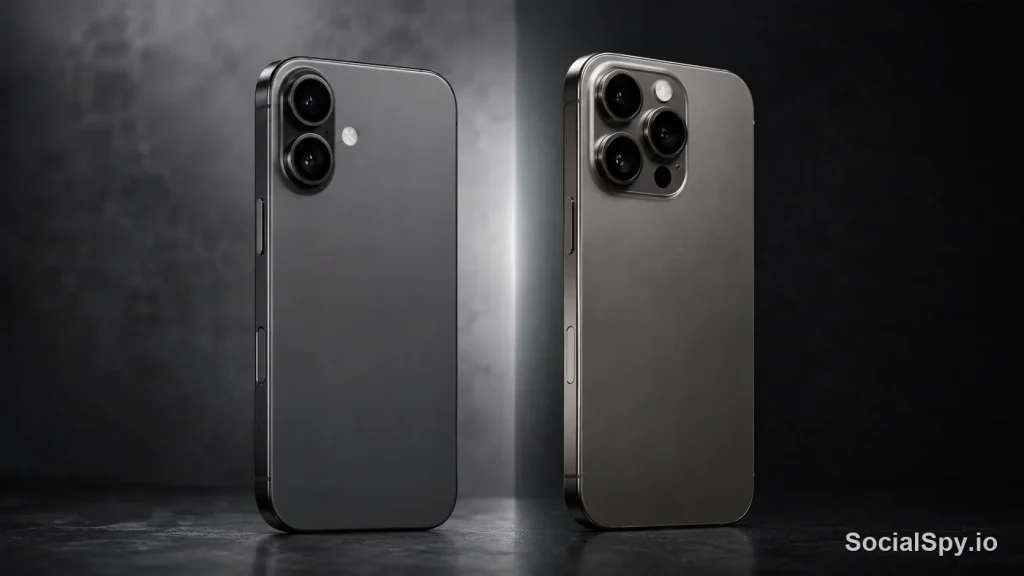
Apple’s 2023 shift to titanium on the Pro line was a genuine departure, and it still shows. The iPhone 15 Pro uses a grade 5 titanium frame with a brushed finish that resists fingerprints better than the glossy stainless steel of older Pro models, while the iPhone 16 sticks with an aluminum frame like every standard-tier iPhone before it.
That distinction matters less than marketing suggests. Titanium is lighter and marginally more scratch-resistant, but aluminum is actually more dent-resistant in a drop, which is arguably the more common real-world failure mode.
- iPhone 15 Pro: 187g (Pro) or 221g (Pro Max), titanium frame, textured matte glass back
- iPhone 16: 170g (base) or 199g (Plus), aluminum frame, glossy glass back with Ceramic Shield front and back
- Color options: iPhone 16 introduced Ultramarine and Teal, while the 15 Pro’s Natural Titanium and Blue Titanium remain more understated
The iPhone 16 also introduced the Camera Control button, a capacitive, pressure-sensitive strip on the bottom right edge for launching the camera and adjusting zoom or exposure with a light swipe. The 15 Pro has no equivalent, though it does have the Action Button that replaced the mute switch — a feature Apple later brought to the entire iPhone 16 lineup, so that’s no longer a differentiator.
Industry reviewers have generally agreed that Camera Control is a promising idea with clumsy execution in its first year, often triggering by accident in a pocket — a rough edge Apple has been refining through iOS updates rather than hardware revisions.
Chip and Performance: A17 Pro vs A18
This is where the generational gap becomes concrete rather than cosmetic. The iPhone 15 Pro runs the A17 Pro, built on TSMC’s first-generation 3nm process, notable at launch for finally bringing hardware-accelerated ray tracing to a phone GPU. The iPhone 16 runs the A18, a second-generation 3nm chip that Apple built specifically with sustained Apple Intelligence workloads in mind.
| Spec | iPhone 15 Pro | iPhone 16 |
|---|---|---|
| Chip | A17 Pro | A18 |
| CPU cores | 6 (2 performance, 4 efficiency) | 6 (2 performance, 4 efficiency) |
| GPU cores | 6-core, ray tracing | 5-core, ray tracing |
| Neural Engine | 16-core | 16-core |
| RAM | 8GB | 8GB |
| Benchmark edge | Slightly better GPU throughput in short bursts | Better sustained performance, more efficient under load |
In practice, single-core CPU scores are close, but the A18 pulls ahead in multi-core tasks and, more importantly, in thermal management. Reviewers running back-to-back gaming and video export tests have consistently found the iPhone 16 throttles less over a 20-30 minute session, which matters far more for daily use than a synthetic benchmark peak.
The neural engine bump is the real story, though. Apple designed the A18 as the baseline chip for Apple Intelligence, and while the A17 Pro can technically run most Apple Intelligence features, Apple has been slower to bring newer on-device model updates to it, and some visual intelligence features have rolled out to A18 devices first.
Cameras: Where the Pro Still Pulls Ahead
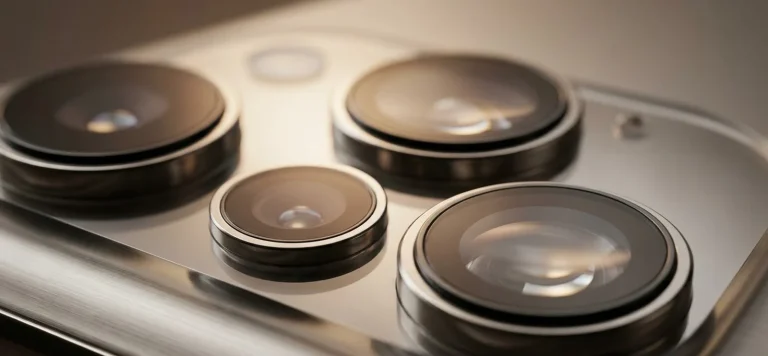
This remains the clearest reason to still want the 15 Pro over the 16, and it’s not close. The iPhone 15 Pro has a triple-camera system including a 5x tetraprism telephoto lens exclusive to the Pro Max at launch (the smaller 15 Pro got 3x). The iPhone 16 has just two rear cameras.
iPhone 16 Camera System
- 48MP main (ƒ/1.6, second-generation sensor-shift stabilization)
- 48MP Ultra Wide (upgraded from 12MP on the 15 non-Pro, now shared across the lineup)
- 2x optical-quality zoom via sensor crop, not a true telephoto lens
- Spatial video capture for Vision Pro
- Audio Mix feature for adjusting background noise in videos after the fact
iPhone 15 Pro Camera System
- 48MP main (ƒ/1.78)
- 12MP Ultra Wide
- 12MP Telephoto — 3x on iPhone 15 Pro, 5x tetraprism on iPhone 15 Pro Max
- ProRAW and ProRes video support at higher bitrates
- LiDAR scanner for faster autofocus in low light and AR applications
The 15 Pro’s telephoto glass alone makes it the better choice for anyone who shoots concerts, wildlife, sports, or kids on a soccer field from the sidelines. The 16’s “2x zoom” is a crop of the 48MP sensor, which looks fine in bright light but falls apart faster in shadows or indoor shots compared to genuine optical zoom.
That said, the 16’s Ultra Wide upgrade to 48MP is a meaningful practical win for landscape and architecture shots that the 15 Pro, with its 12MP Ultra Wide, simply can’t match in fine detail.
Display, Battery, and Storage
Both phones use Apple’s Super Retina XDR OLED panels with ProMotion up to 120Hz — wait, that’s actually another point of separation. Only the Pro models get ProMotion; the standard iPhone 16 is capped at a 60Hz refresh rate, same as every non-Pro iPhone before it.
- iPhone 15 Pro display: 6.1″ (Pro) or 6.7″ (Pro Max), ProMotion 120Hz, Always-On display, peak 2,000 nits outdoor brightness
- iPhone 16 display: 6.1″ (base) or 6.7″ (Plus), fixed 60Hz refresh, peak 2,000 nits outdoor brightness, no Always-On display
For anyone who scrolls social feeds or plays games regularly, the 120Hz difference is genuinely noticeable within the first day of switching, and it’s arguably the single biggest quality-of-life gap between these two phones.
On battery, Apple rates the iPhone 16 for up to 22 hours of video playback versus 23 hours on the iPhone 15 Pro, though the Pro Max variant of the 15 lineup stretches to 29 hours thanks to its larger chassis. Real-world battery life tracks closely with these numbers, with the base 16 model actually edging out the smaller 15 Pro in mixed daily use due to the A18’s improved efficiency cores.
Both models start at 128GB and scale to 256GB, 512GB, and 1TB (Pro only) configurations, though buyers replacing an older iPhone should know that battery degradation is a real long-term cost regardless of which model you pick — something covered in detail in guides on iPhone 15 Pro battery replacement costs and iPhone 15 Pro Max battery replacement costs for anyone weighing a used purchase.
Software Longevity and Apple Intelligence
This is the section that actually changes the calculus for a 2026 buyer. Apple typically guarantees roughly five to six years of major iOS updates from a phone’s release date, and the iPhone 16, having launched a full year after the 15 Pro, will keep receiving new iOS versions and security patches a year longer.
- iPhone 15 Pro launched September 2023, expected to receive major iOS updates through roughly 2029-2030
- iPhone 16 launched September 2024, expected to receive major iOS updates through roughly 2030-2031
- Both support the current wave of Apple Intelligence features, including writing tools, notification summaries, and Genmoji
- The iPhone 16 has been first in line for newer Apple Intelligence rollouts, including expanded Siri capabilities Apple has been rolling out through iOS 26 updates
For someone planning to keep a phone for four or five years — which is now the norm, given how expensive new iPhones have gotten — that extra year of guaranteed support is worth more than any single spec bump. It’s the difference between a phone that ages out of eligibility for a major redesign update in 2029 versus one that’s still current in 2030.
A phone bought used or refurbished today needs runway left in its update cycle more than it needs a slightly better zoom lens — the 16’s extra year of support is the quiet, unglamorous reason it’s aging better.
Price and Value in Today’s Market
By August 2026, neither phone is sold new by Apple directly — both have been superseded by the iPhone 17 lineup — but they remain widely available through carriers, Amazon, Best Buy, and certified refurbished channels, often at steep discounts.
- iPhone 16 refurbished/carrier deals: typically $450-$600 for 128GB, depending on condition and carrier lock status
- iPhone 15 Pro refurbished/used: typically $500-$700 for 128GB, still commanding a premium for the titanium build and telephoto camera
- iPhone 15 Pro Max: often $650-$850 used, holding value best due to the 5x zoom lens
- Apple’s official refurbished store, when stock is available, tends to price these within $50-$100 of top-tier third-party retailers but includes a full one-year warranty
Given that the 15 Pro often costs more than the 16 on the used market despite being older, the value math tips firmly toward the 16 unless the telephoto camera or 120Hz display is a dealbreaker. Buyers coming from anything older, like an iPhone 13 Pro or an iPhone 12 Pro, will notice a massive jump in either direction regardless of which of these two they choose.
Conclusion
Neither of these phones is a bad purchase in 2026 — that’s precisely why the decision is harder than it looks on a spec sheet. The iPhone 15 Pro is the better camera system, the better display technology at 120Hz, and arguably still the nicer piece of hardware to hold thanks to titanium.
But the iPhone 16 is the more future-proof phone: newer chip, longer software runway, and a lower typical resale price despite being the newer device. If you shoot a lot of zoomed-in photos or care deeply about ProMotion smoothness, pay the premium for a used 15 Pro or Pro Max.
If you just want the phone that’ll still feel current in 2029 and costs less right now, the iPhone 16 is the pragmatic pick — and that pragmatism is exactly what’s driving its stronger resale demand this year.
FAQ
In sustained, real-world tasks like gaming sessions or long video exports, yes — the A18 chip in the iPhone 16 manages heat better and holds its clock speeds longer than the A17 Pro. In short synthetic benchmarks the two chips are close, with the 15 Pro’s GPU occasionally scoring slightly higher in brief bursts.
They’re close on paper, with Apple rating the 15 Pro at roughly 23 hours of video playback versus 22 hours for the iPhone 16, but the A18 chip’s efficiency improvements mean the 16 often edges ahead in real-world mixed use. The iPhone 15 Pro Max still leads both by a wide margin thanks to its larger battery capacity.
Buy the iPhone 16 if you want the longer software support window and lower typical price; buy the iPhone 15 Pro if the 5x telephoto zoom, 120Hz ProMotion display, or titanium build are priorities you’re not willing to give up. Whichever you choose, factor in that an aging battery is likely on a phone this old, and replacement costs should be part of your budgeting.