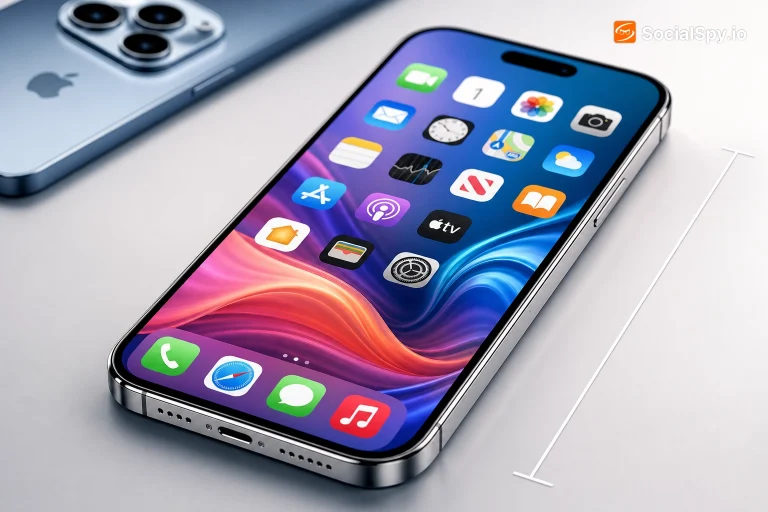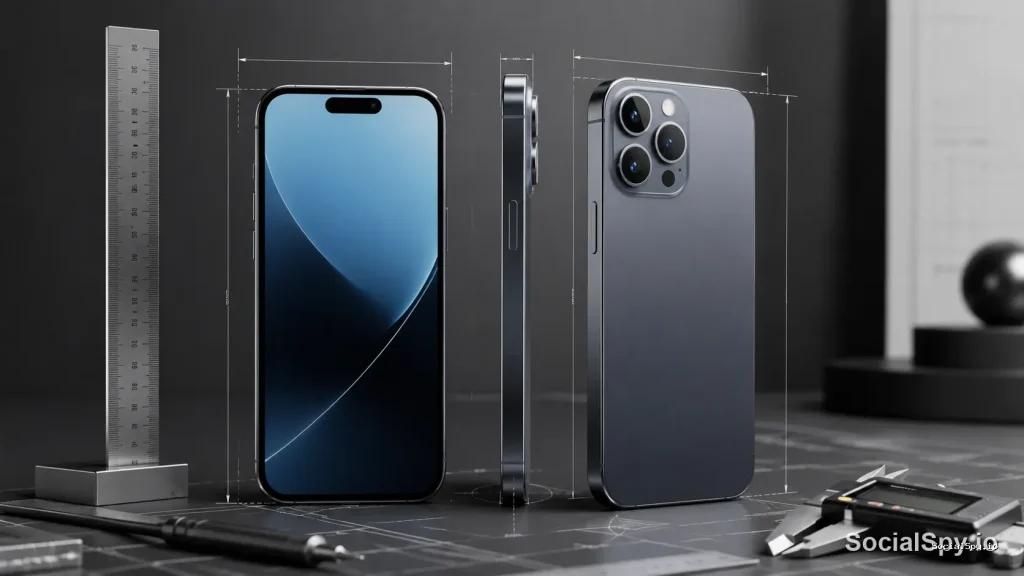
The physical size of an iPhone shapes almost everything about how you use it — from whether it fits in a jeans pocket to how it feels typing one-handed on a crowded train. Apple treats millimeters and grams as seriously as chip speed, and the differences between models are bigger than most buyers realize until they’re standing in a store comparing two boxes. This guide breaks down the actual height, width, depth, and weight of every current and recent iPhone, and explains what those numbers mean in real-world use.
Why iPhone Dimensions Actually Matter
Apple doesn’t publish dimensions as an afterthought. Every fraction of a millimeter affects battery capacity, camera hardware placement, thermal performance, and how the phone sits in your hand.
A phone that’s 8.25mm thick can house a larger battery cell than one at 7.6mm, which is why Pro models historically run thicker despite being marketed as premium and compact. Meanwhile, width matters more than height for one-handed use — anything over 75mm wide starts to strain average thumb reach across the screen.
- Height determines pocket depth and how far you reach to tap the top of the screen.
- Width is the single biggest factor in one-handed usability.
- Depth (thickness) trades off directly against battery size and camera bump prominence.
- Weight affects wrist fatigue during long scrolling or gaming sessions.
Industry display analysts have long noted that the “sweet spot” for one-handed comfort sits around 71mm of width — almost every standard iPhone since the iPhone 6 has clustered right around that number for a reason.
Full Dimension Breakdown by Model
Here’s how the current and recent iPhone lineup compares side by side. Depth excludes the camera bump, which typically adds another 1-2mm on Pro models.
| Model | Height x Width x Depth | Weight | Display |
|---|---|---|---|
| iPhone 16 Pro Max | 163.0 x 77.6 x 8.25 mm | 227g | 6.9″ |
| iPhone 16 Plus | 160.9 x 77.8 x 7.8 mm | 199g | 6.7″ |
| iPhone 16 Pro | 149.6 x 71.5 x 8.25 mm | 199g | 6.3″ |
| iPhone 16 | 147.6 x 71.6 x 7.8 mm | 170g | 6.1″ |
| iPhone 15 Pro Max | 159.9 x 76.7 x 8.25 mm | 221g | 6.7″ |
| iPhone 15 Plus | 160.9 x 77.8 x 7.8 mm | 201g | 6.7″ |
| iPhone 15 Pro | 146.6 x 70.6 x 8.25 mm | 187g | 6.1″ |
| iPhone 15 | 147.6 x 71.6 x 7.8 mm | 171g | 6.1″ |
| iPhone 14 Plus | 160.8 x 78.1 x 7.8 mm | 203g | 6.7″ |
| iPhone 13 mini | 131.5 x 64.2 x 7.65 mm | 141g | 5.4″ |
| iPhone 12 mini | 131.5 x 64.2 x 7.4 mm | 133g | 5.4″ |
| iPhone SE (2022) | 138.4 x 67.3 x 7.3 mm | 144g | 4.7″ |
Apple’s newest 2026 lineup, headlined by the iPhone 17 series and the ultra-thin iPhone Air, pushes these numbers further. The Air reportedly measures close to 5.6mm at its thinnest point, making it the slimmest iPhone Apple has ever shipped, while the 17 Pro Max continues to grow toward the 163mm-plus height range seen in Pro Max models since 2022.
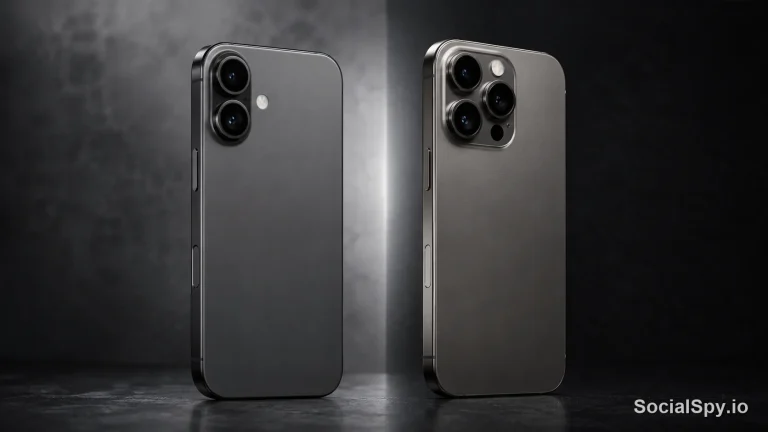
If you want a granular look at how last year’s flagship stacked up against the Pro tier before it, the iPhone 16 vs 15 Pro comparison walks through exactly how a few millimeters translated into noticeably different in-hand feel.
How These Numbers Play Out in Everyday Use
Spec sheets are abstract until you actually carry the phone. Here’s what the dimension differences mean once a phone leaves the box.
Pocket and Bag Fit
Anything over 160mm tall starts sticking noticeably out of front jeans pockets, especially on slim-cut styles. The Plus and Pro Max lines fall firmly into this category, which is part of why some users downsize despite wanting the bigger screen.
- Standard models (147-150mm) fit most front pockets without printing through fabric.
- Plus/Pro Max models (159-163mm) are more comfortable in back pockets, bags, or with a case that adds grip.
- Mini models (131.5mm) were the last iPhones that disappeared completely into a shirt pocket.
One-Handed Typing and Reachability
Width is the real culprit behind “can’t reach the top corner” complaints. A 77.6mm wide Pro Max is roughly 8mm wider than the standard iPhone 16 — that gap is the difference between comfortably swiping down for Control Center and needing to shift your grip.
Apple’s own Reachability feature (double-tap the bottom edge, or swipe down on newer models) exists specifically because the company knows most Plus and Pro Max buyers can’t reach the top of the screen one-handed. It’s a software patch for a hardware compromise.
Weight Over a Full Day
A 227g iPhone 16 Pro Max weighs almost as much as a small can of soda. That’s roughly 57g heavier than the standard iPhone 16, and it adds up during long gaming sessions, video calls held at arm’s length, or hours of one-handed scrolling.
- 130-145g phones (mini, SE) rarely cause hand fatigue even after hours of use.
- 170-200g phones (standard, Pro) are the current comfort baseline for most users.
- 220g+ phones (Plus, Pro Max) benefit from a lighter case or a pop grip to offset the heft.
Weight and Thickness Trends Over the Years
Here’s something most people miss: iPhones have gotten thicker, not thinner, since 2020, reversing more than a decade of Apple’s “thinner is better” marketing. The iPhone 12 measured 7.4mm thick; by the iPhone 15 Pro, that number climbed to 8.25mm.
The reason is almost entirely battery-driven. Larger batteries need more physical volume, and Apple has prioritized all-day battery life over shaving fractions of a millimeter — a tradeoff most reviewers and users have welcomed. That’s the same tension covered in depth in guides like the iPhone 15 Battery Replacement breakdown, where battery capacity and physical cell size are directly tied to how thick the chassis needs to be.
The 2026 iPhone Air flips this trend on its head, betting that most users will accept a smaller battery in exchange for a genuinely pocketable, ultra-slim design — something the market hasn’t seen prioritized since the iPhone 6.
| Year | Model | Depth | Battery Tradeoff |
|---|---|---|---|
| 2020 | iPhone 12 | 7.4mm | Smaller cell, lighter phone |
| 2022 | iPhone 13 | 7.65mm | Slightly larger cell |
| 2023 | iPhone 15 Pro | 8.25mm | Titanium frame + bigger cell |
| 2026 | iPhone Air | ~5.6mm | Smaller cell, thinnest chassis ever |
Mini, Plus, and Pro Max: Choosing the Right Footprint
Apple discontinued the mini line after the iPhone 13 mini due to weak sales, but plenty of people still hunt for one specifically because of its 131.5mm x 64.2mm footprint — genuinely pocketable in a way no current model matches.
If you’re weighing a used mini against a new standard-size model, it helps to understand what you’re signing up for long-term, including battery service. The iPhone 13 Mini Battery Replacement guide covers exactly what it costs to keep that smaller battery cell healthy once it starts degrading, which matters more on a mini since there’s less physical room for battery capacity to begin with.
For buyers choosing between size tiers today, here’s a practical framework:
- Want maximum screen real estate and don’t mind the bulk → Pro Max or Plus.
- Want the best balance of size and battery life → standard Pro or base model.
- Want the lightest, most pocketable option Apple currently sells → base model or the new Air.
- Want the absolute smallest footprint → look secondhand for a 12 mini or 13 mini, understanding it’s no longer sold new.
Buyers holding onto larger Plus-sized phones for the battery life should also know how that plays out over a few years of use — the iPhone 14 Plus Battery Replacement guide is a good reference for what degradation and replacement costs look like on that bigger 7.8mm-thick chassis.
What the Dimensions Mean for Cases and Accessories
Dimension differences aren’t just cosmetic — they determine hardware compatibility across generations, which trips up a lot of people who assume “it’s an iPhone, it’ll fit.”
- Cases are not interchangeable between standard and Pro models in the same year, despite near-identical height and width, because camera bump size and button placement differ.
- MagSafe accessories rely on precise magnet ring placement, which shifts slightly between Plus and Pro Max models even though they’re close in size.
- Screen protectors sized for one year’s Pro model often don’t seat correctly on the next year’s Pro, even when dimensions only change by a fraction of a millimeter.
- Car mounts and bike mounts rated by “maximum width” need real headroom — a mount rated for exactly 78mm may not comfortably clamp a 77.8mm phone once a case is added.
This is also why case makers scramble every September: a 2mm shift in width or a repositioned camera cutout can render an entire inventory of cases obsolete overnight.
Conclusion
The millimeter-level differences between iPhone models aren’t marketing trivia — they’re the difference between a phone that disappears in your pocket and one that dominates your hand. As Apple’s 2026 lineup shows with the ultra-thin iPhone Air pushing back against a decade of thickening chassis designs, dimension choices reflect real engineering tradeoffs between battery life, camera hardware, and portability. Before upgrading, measure your current phone against the model you’re considering rather than trusting screen size alone — a 6.1-inch display can live in bodies that differ by nearly 10 grams and a full millimeter of thickness depending on the year and tier.
FAQ
The iPhone 16 measures 147.6 x 71.6 x 7.8mm and weighs 170g, while the iPhone 16 Pro Max measures 163.0 x 77.6 x 8.25mm and weighs 227g — a difference of over 15mm in height, 6mm in width, and 57g in weight, which is noticeable in one-handed use and pocket fit.
Generally yes, since extra depth allows for a physically larger battery cell, which is why Pro models at 8.25mm typically outlast slimmer 7.8mm standard models in real-world testing; the tradeoff is a heavier, less pocketable device, and Apple’s 2026 iPhone Air breaks this pattern by prioritizing thinness over maximum battery capacity.
Even a shift of one to two millimeters in camera bump size, button placement, or overall depth can throw off case alignment, and manufacturers redesign cutouts every year around Apple’s exact CAD files rather than relying on rounded spec-sheet numbers, which is why a case rated for one generation rarely fits cleanly on the next.