The phrase pops up in your Phone app’s Recents tab, in call center dashboards, and in VoIP apps, and it confuses almost everyone who sees it for the first time. It looks like an error, but it’s actually a specific, well-defined call status with a clear technical explanation.
What “Canceled Call” Actually Means in Your Phone’s Call Log
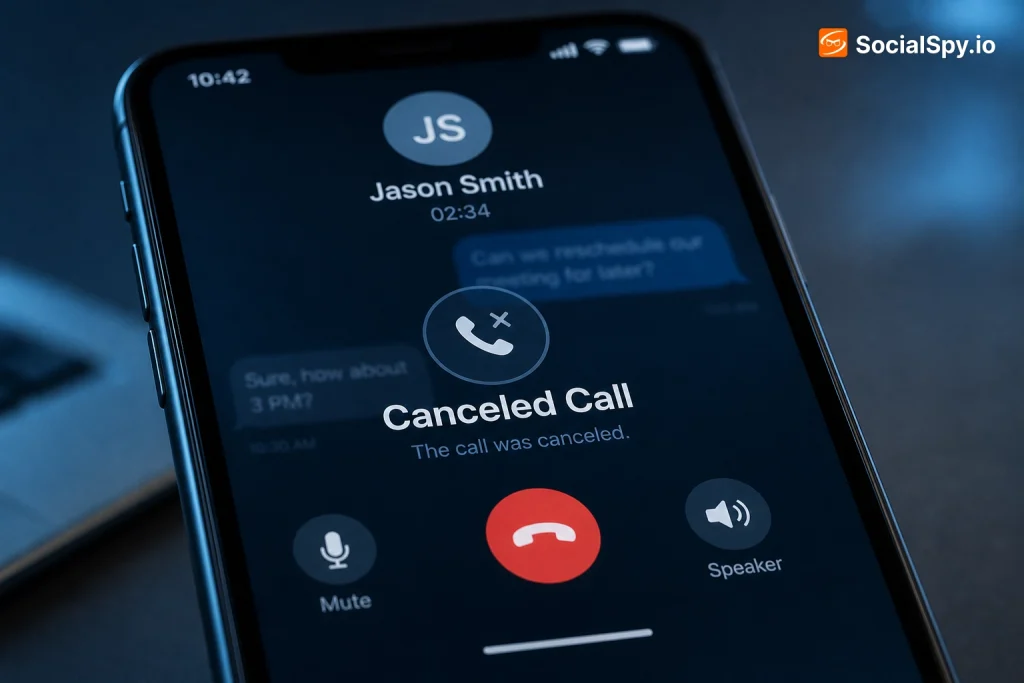
On an iPhone, open the Phone app and tap Recents. Most entries say “Missed,” “Outgoing,” or nothing at all if the call connected normally. But every so often you’ll see gray text reading “Canceled Call” next to a number or contact name.
That label means the call attempt was terminated before it completed the standard call setup process — before the network finished establishing a ring on the other person’s device. In practical terms, it usually happens when the caller hangs up almost immediately, often within 1 to 4 seconds of dialing.
- It appears in your own outgoing history when you hang up before the call fully connects
- It can also appear as an incoming entry if someone called you and canceled before your phone actually rang
- It is distinct from a dropped call, which ends after the conversation has already started
- It’s distinct from a “Failed Call,” which usually indicates a network or carrier-side problem, not a user hang-up
Apple’s own support documentation groups this under general call history categories, but the label itself is generated by the iOS telephony stack based on call session timing data reported by the carrier network.
Canceled Call vs. Missed Call vs. Declined Call
These three terms get used interchangeably in casual conversation, but they represent completely different technical events. Mixing them up is the number one reason people misread their call logs.
| Status | What Actually Happened | Does the Recipient’s Phone Ring? |
|---|---|---|
| Missed Call | Call rang on recipient’s device; they didn’t pick up in time | Yes, fully rings |
| Declined Call | Recipient actively rejected the call (swiped/pressed decline) | Yes, briefly, then stops |
| Canceled Call | Caller hung up before the call reached the recipient’s ringer | Usually no, or only a partial fraction of a second |
The key distinguishing factor is ringer engagement. A missed call always means the recipient’s phone rang for a meaningful duration — long enough that they had a real opportunity to answer. A canceled call skips that window entirely.
Industry telecom engineers describe canceled calls as “session teardown before alerting completes” — a mouthful, but it captures the core idea: the connection was killed before the alert (ringtone) phase even finished initializing.
Why Do Calls Get Canceled? The Real Reasons
There isn’t one single cause. Canceled calls show up for at least five distinct, common reasons, and figuring out which one applies to your situation usually comes down to context.
- Accidental dials (pocket dials). Your phone brushes against a pocket, bag, or car seat, initiates a call, and the touch that started it also ends it almost instantly.
- Second-thoughts hang-ups. You start dialing, realize you called the wrong contact, or decide not to make the call, and cancel before it connects.
- Network handoff delays. On a weak signal, especially switching between LTE and 5G or moving between cell towers, the setup handshake can time out and the system logs it as canceled rather than failed.
- Group or conference call artifacts. In multi-party calling, dropping one participant before they connect can generate a canceled entry in that person’s log.
- Auto-dialer and robocall software. Predictive dialers used by call centers and, less legitimately, by spam operations dial numbers faster than agents can answer, and cancel the excess calls automatically.
That last category is worth its own dedicated explanation, because it’s become the most commonly searched reason people look up this term at all.
Canceled Calls and the Robocall/Spam Connection
Here’s where things get more interesting than a simple accidental hang-up. Predictive dialing systems, used heavily by telemarketers, debt collectors, and unfortunately scam operations, place multiple outbound calls simultaneously, anticipating that a certain percentage will go unanswered or hit voicemail.
When more calls connect than the system has live agents ready to handle, the software cancels the excess calls the instant a human line picks up. That produces exactly the pattern users see as a canceled call: their phone barely rings, or doesn’t ring at all, before the caller ID disappears.
- The FCC’s Federal Trade Commission robocall complaint data has repeatedly flagged predictive dialer abandonment as a compliance issue under telemarketing rules
- U.S. regulations generally cap the “abandonment rate” (calls dropped after connecting) at 3% for legitimate telemarketers under FTC and FCC rules
- Scam operations frequently ignore this threshold entirely, producing bursts of one-ring or canceled calls, sometimes called “one-ring scams” or “Wangiri” fraud, designed to bait you into calling back a premium-rate number
This is exactly why a string of canceled calls from unfamiliar numbers, especially international area codes you don’t recognize, deserves caution rather than a callback. Reliable connectivity matters just as much in the opposite direction — for a deeper look at how carrier networks handle priority traffic differently, it’s worth understanding why you don’t need service to call 911, since emergency call routing bypasses a lot of the normal session-setup logic that produces canceled-call entries in everyday calling.
Does the Other Person Know You Canceled the Call?
This is the question people ask most after spotting the label on their own phone. The honest answer depends on timing and platform, but generally, the recipient’s awareness is minimal.
On iPhone
If you cancel within roughly a second or two, the recipient’s phone often never rings at all, and nothing appears in their Recents. If your cancellation happens slightly later, a partial ring or a single buzz may register, sometimes logged on their end as a missed call rather than canceled, since the labeling depends on which side’s telephony stack processed the teardown.
On Android
Android’s handling varies more by manufacturer skin (Samsung’s One UI, Google’s Pixel dialer, etc.), but the general pattern holds: very fast cancellations tend not to generate any visible history on the receiving device, while slightly longer ones can produce a “missed call” notification even though the caller only meant to dial and immediately hang up.
- Neither platform sends the recipient a push notification specifically labeled “canceled call”
- Carrier-level logs (visible to your phone company, not typically to consumers) do track these events with millisecond precision
- If you’re worried you canceled a call on someone important, it’s generally safer to just call back and explain than to assume they saw nothing
iPhone vs Android: How Each Platform Labels It
The terminology genuinely differs across ecosystems, and that inconsistency is part of why the search term “what does canceled call mean” trends so heavily among iPhone users specifically — Apple is far more explicit about it than Google.
- iOS: Displays “Canceled Call” directly in gray text in the Phone app’s Recents list
- Google Pixel / stock Android: Often just omits the entry entirely or briefly shows it before it disappears, without a persistent explicit label
- Samsung One UI: May log it under a general “Outgoing” tag without distinguishing it from a normal completed dial attempt
- WhatsApp / FaceTime / Google Voice: Use their own separate logic entirely, often showing “Canceled” only when the app-based call (VoIP, not carrier) session ends before the recipient’s client acknowledges the incoming ring signal
Business phone systems and VoIP dashboards (RingCentral, Zoom Phone, Google Voice for Business, etc.) use “canceled” as a formal status distinct from “missed,” “abandoned,” and “no answer” — each tied to a different service-level metric that call centers actually get measured against. If you manage a small business line, understanding which of these categories your reports are tracking actually matters for staffing decisions, not just curiosity.
Confusing platform-specific labeling isn’t unique to phone calls, either — social apps do the same thing with their own shorthand, the way people search to figure out what CFS means on Instagram when a term shows up without explanation. Every platform invents its own vocabulary for status updates, and telephony is no exception.
What to Do If You See a Lot of Canceled Calls
A single canceled call in your history is almost always meaningless — a pocket dial, a change of mind, a brief signal hiccup. A pattern of them, especially from unknown numbers, is worth paying attention to.
- Check the area code and time pattern. Repeated canceled calls at odd hours from numbers you don’t recognize, especially with foreign country codes, often indicate robocall or Wangiri-style scanning activity
- Never call back unknown international numbers that show up as canceled calls, since some are designed specifically to bait a callback to a premium-billed line
- Use built-in call screening. Both iOS (Silence Unknown Callers) and Android (Google’s Call Screen feature on Pixel devices) can filter these out before they ever generate a log entry
- Report persistent patterns to your carrier or through the FTC’s DoNotCall.gov complaint portal if you suspect telemarketing abuse
- Check your own outgoing canceled calls occasionally too — a sudden spike from your own device with no memory of dialing can indicate a misbehaving app or, rarely, malware triggering background dial attempts
For most people, though, seeing an occasional canceled call next to a friend’s or family member’s name simply means exactly what it sounds like: someone started to call, then thought better of it, changed their mind, or got interrupted before the phone even had a chance to ring.
Conclusion
“Canceled call” isn’t a glitch, a hidden feature, or a sign your phone is broken — it’s a precise technical label describing a call that never made it past the setup stage before someone ended it. Understanding the distinction between canceled, missed, and declined calls turns a confusing gray line in your Recents list into useful information: it tells you whether someone genuinely tried to reach you, whether your own phone dialed something you didn’t intend, or whether an auto-dialer is testing your number. The label matters most in bulk — one canceled call is noise, but a pattern of them from unfamiliar numbers is a signal worth acting on, whether that means enabling call screening, reporting a suspected scam, or just double-checking your own pocket before it dials the next contact in your recents list.
FAQ
No, canceled call status has nothing to do with blocking. Blocking produces a completely different result — the call typically goes straight to voicemail or gets silently rejected without ever showing as “canceled” in your own outgoing log, since your phone has no visibility into the recipient’s block list.
This usually points to either a background app triggering a dial attempt (some older third-party dialer or automation apps have done this), a pocket dial from your phone bumping against something while unlocked, or in rarer cases a sign your device needs a security check if the pattern is frequent and you use call-enabled apps you don’t fully trust.
No, they happen at different stages of a phone call. A dropped call means the conversation had already started and then got disconnected, usually due to a network issue, while a canceled call means the connection never got that far — it was ended during setup before either party actually started talking.