iPhone 11 Pro Max Battery Basics
The iPhone 11 Pro Max shipped with the largest battery Apple had put in an iPhone up to that point, and it was genuinely marketed on battery life - Apple's own launch materials claimed up to 5 hours more than the iPhone XS Max it replaced. That reputation for strong battery life is actually useful information now, years later, when you're trying to judge whether yours needs a new battery.
What Made the iPhone 11 Pro Max Special
The 11 Pro Max was Apple's first "Pro Max" model, introducing the triple-camera system (wide, ultra-wide, telephoto) that has defined every Pro iPhone since, alongside Night Mode for genuinely usable low-light photography - a real leap over previous iPhone cameras. It was also explicitly marketed on battery life, a first for Apple's flagship messaging.
How the iPhone 11 Pro Max Battery Ages
Because the 11 Pro Max started out with such a large capacity and a real battery-life advantage over its predecessor, noticeable day-to-day drain today is a fairly reliable sign of genuine degradation - more so than it would be on a phone that was already battery-constrained when new. Underneath that reputation, the battery ages the same way every iPhone's does: it's rated to hold at least 80% of its original capacity through roughly 500 full charge cycles, and several years past launch, most units in daily use have gone well past that threshold.
Signs You Need a Replacement
A 11 Pro Max that now struggles through a normal day - not a heavy-use day, an ordinary one - has typically lost a substantial share of its original capacity, since it started out ahead of nearly every iPhone before it. Checking Battery Health directly (Settings, then Battery, then Battery Health & Charging) will confirm it: a reading well below 80% is common and expected on a unit this age still running its original battery, and unexpected shutdowns at non-zero charge are a frequent companion symptom.
What a Replacement Costs
As Apple's flagship model of its generation, the 11 Pro Max typically costs more to service than the standard 11, reflecting its larger battery and more complex triple-camera assembly. Since it's now several years past its original warranty and AppleCare+ window for most owners, this is usually an out-of-pocket cost - independent repair shops tend to offer the most competitive pricing for a model this age, since parts and labor for it are well-established at this point.
DIY vs. Professional Replacement
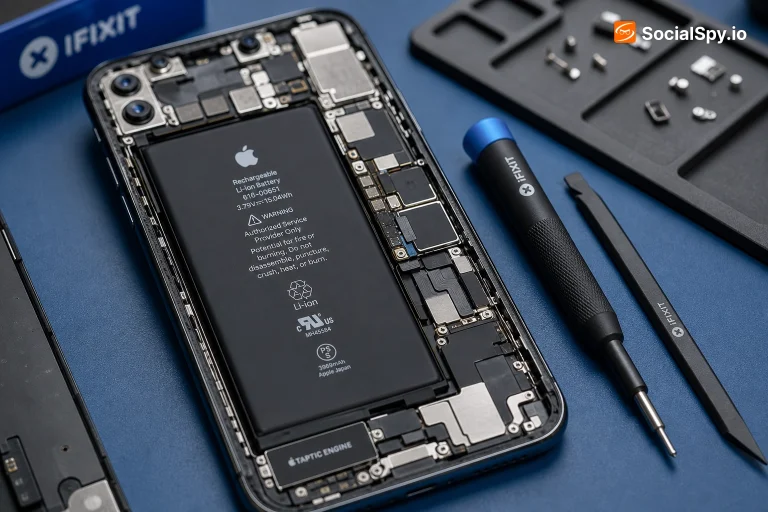
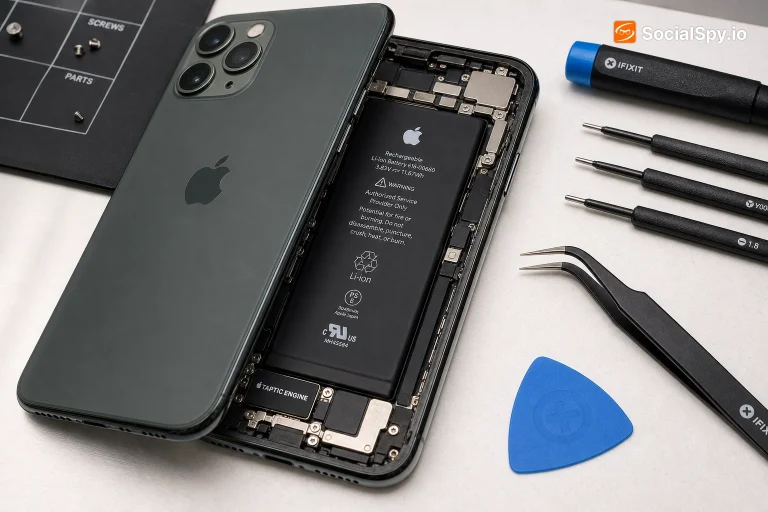
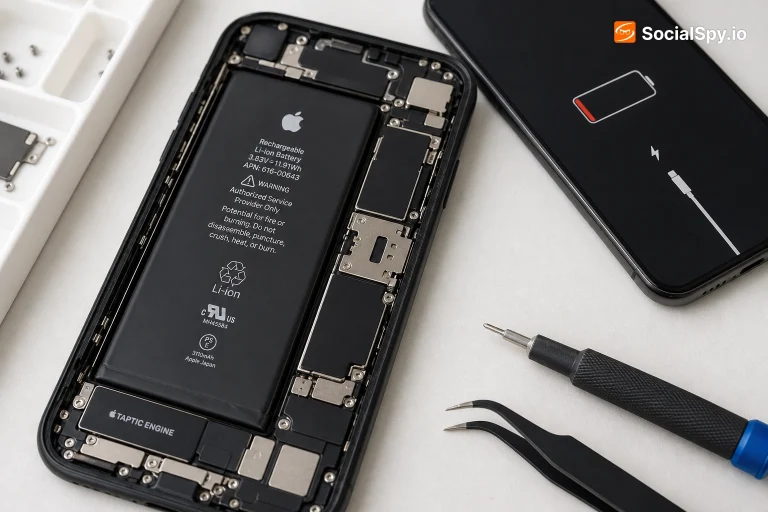
The 11 Pro Max uses stretch-release adhesive strips to hold its large battery in place, and being an older design at this point, its repair process is well-documented with plenty of guides and parts available. Its size gives a DIYer a bit more physical room to work than smaller iPhones, though the triple-camera Pro hardware still takes up real internal space. The core safety risk - puncturing the cell while freeing it from the adhesive - is the same as on any iPhone, and remains the main reason professional repair is the safer choice unless you're already comfortable with this kind of work.
Tips to Make It Last Longer
Given the 11 Pro Max's age at this point, the most useful thing you can do for its battery is simply check Battery Health and plan around what you find, rather than trying to extend the life of an already well-used original cell through new habits alone. That said, avoiding heat exposure and leaving Optimized Battery Charging enabled both still help slow further wear once a fresh battery is in, and are worth keeping regardless of the phone's age.
Is the iPhone 11 Pro Max Still Worth It in 2026?
In 2026, the 11 Pro Max remains a strong choice for camera-focused use if you find one in good condition - the triple-camera system and Night Mode still produce genuinely good photos years later. Given its age, Battery Health is essential to check before buying, since this model started with such a strong battery reputation that a degraded unit will feel like a noticeably different phone than its original self.
Frequently Asked Questions
Yes - at launch it had the best battery life of any iPhone up to that point, with Apple claiming roughly 5 hours more than the iPhone XS Max. That reputation makes a genuinely short-lasting 11 Pro Max today a fairly clear sign the battery has degraded.
If the rest of the phone (storage, camera, performance) still meets your needs, yes - it's an inexpensive way to meaningfully extend the life of a phone that still holds up well against much newer models in day-to-day use.
If the only real complaint is battery life or unexpected shutdowns and everything else (screen, cameras, storage, app compatibility) still works well, a battery replacement is almost always the more cost-effective fix before considering a new phone.
It has continued to receive iOS updates for years past launch, though eventually all older iPhones stop receiving the very latest OS versions - checking Settings, then General, then Software Update will show what's currently available for your specific unit.