In an era where much of our lives are lived online, ensuring digital safety has become paramount. The increasing number of cyber threats has made it essential for individuals to secure their online presence. Two popular tools often mentioned in the context of online security are Virtual Private Networks (VPNs) and antivirus software. Understanding the differences between these tools and how they complement each other is crucial for making informed decisions about your digital safety.
Understanding VPNs
A Virtual Private Network (VPN) is a service designed to provide you with privacy and anonymity online by creating a private network from a public internet connection. VPNs mask your internet protocol (IP) address so your online actions are virtually untraceable. Moreover, they establish secure and encrypted connections to provide greater privacy than even a secured Wi-Fi hotspot.
Benefits of using a VPN include:
- Privacy and Anonymity: VPNs help protect your browsing activity from prying eyes, including ISPs, hackers, and government entities.
- Access to Restricted Content: By masking your IP address, VPNs allow you to bypass geographic restrictions on content.
- Secure Data Transmission: When using public Wi-Fi, VPNs protect your data from being intercepted by encrypting your internet traffic.
While VPNs enhance privacy and security, they may not protect you against all types of cyber threats, such as malware or phishing attacks.
Understanding Antivirus Software
Antivirus software is a program designed to detect, prevent, and remove malware, including viruses, worms, trojans, and more. By scanning your system for malicious activity, antivirus tools help protect your computer from various online threats.
Key features of antivirus software include:
- Malware Detection: Antivirus programs scan your computer for known viruses and malware using signature-based detection.
- Real-time Protection: Many antivirus solutions offer real-time scanning to identify and block threats as they occur.
- System Optimization: Some antivirus tools also include features to enhance system performance by removing unnecessary files and optimizing settings.
However, antivirus software does not make your internet connection anonymous or protect against online tracking.
Do You Need Both VPN and Antivirus?
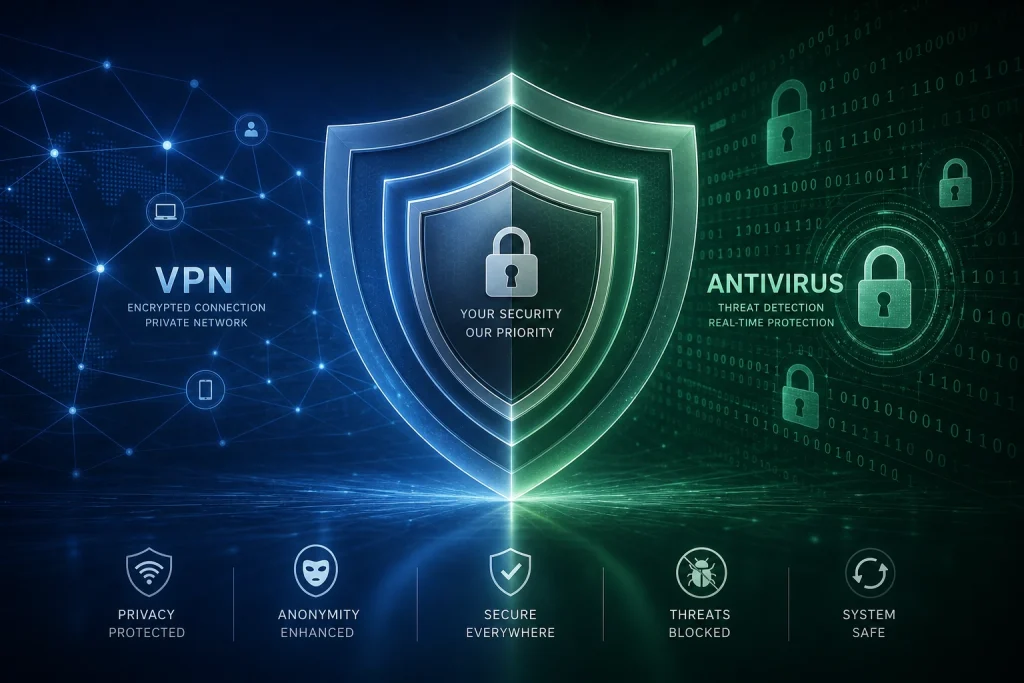
Both VPNs and antivirus software are essential tools for comprehensive online security, but they serve different purposes. While a VPN provides anonymity and encrypts your data, antivirus software protects against malicious software and cyber threats.
Reasons to consider using both include:
- Complete Protection: Using both ensures you are protected from a broader range of threats, including privacy breaches and malware attacks.
- Layered Security: Combining both services creates a multi-layered security approach, making it more difficult for cyber threats to compromise your data.
- Complementary Features: VPNs and antivirus software often include features that complement each other, such as secure browsing and threat detection.
Ultimately, the choice to use one or both depends on your personal security needs and the level of risk you are willing to accept.
Choosing the Right Tools for You
When deciding between a VPN, antivirus, or both, consider the following factors:
- Usage: If you frequently use public Wi-Fi or need to access restricted content, a VPN might be essential. If you download a lot of files or visit potentially unsafe websites, antivirus software is crucial.
- Budget: Evaluate the costs associated with each tool. While some free options exist, premium services often offer enhanced features and better protection.
- Compatibility: Ensure the software is compatible with your devices and operating systems. Some services offer multi-device protection, which can be beneficial for households.
By evaluating your needs and considering these factors, you can make an informed decision that best suits your online security requirements.
Conclusion
Staying safe online requires a strategic approach to cybersecurity. VPNs and antivirus software each play vital roles in protecting your digital presence. While a VPN provides privacy and helps secure your connection, antivirus software safeguards your devices from malware and cyber threats. For comprehensive security, using both tools in tandem is often the best strategy. By understanding their functions and assessing your needs, you can enhance your online safety and protect yourself from the myriad of threats present in the digital world.
FAQ
Do VPNs protect against viruses?
No, VPNs do not protect against viruses. They are designed to provide privacy and anonymity by encrypting your internet connection. To protect against viruses, you need antivirus software.
Can antivirus software replace a VPN?
Antivirus software cannot replace a VPN because they serve different functions. Antivirus protects against malware, while a VPN provides privacy and security for your internet connection. Using both offers more comprehensive protection.
Is it difficult to set up a VPN or antivirus software?
Most VPN and antivirus services are designed to be user-friendly and offer straightforward installation processes. Many providers offer step-by-step guides or customer support to assist with the setup.