Sony’s earbuds lineup has quietly become one of the most competitive in the industry, but the field around it has gotten brutal. Apple, Bose, Samsung, and a wave of value brands like Anker’s Soundcore have all closed the gap that Sony once had almost entirely to itself. So the question for 2026 isn’t whether Sony makes good earbuds — it’s whether they’re still the smartest place to spend your money.
Where Sony Actually Stands in 2026
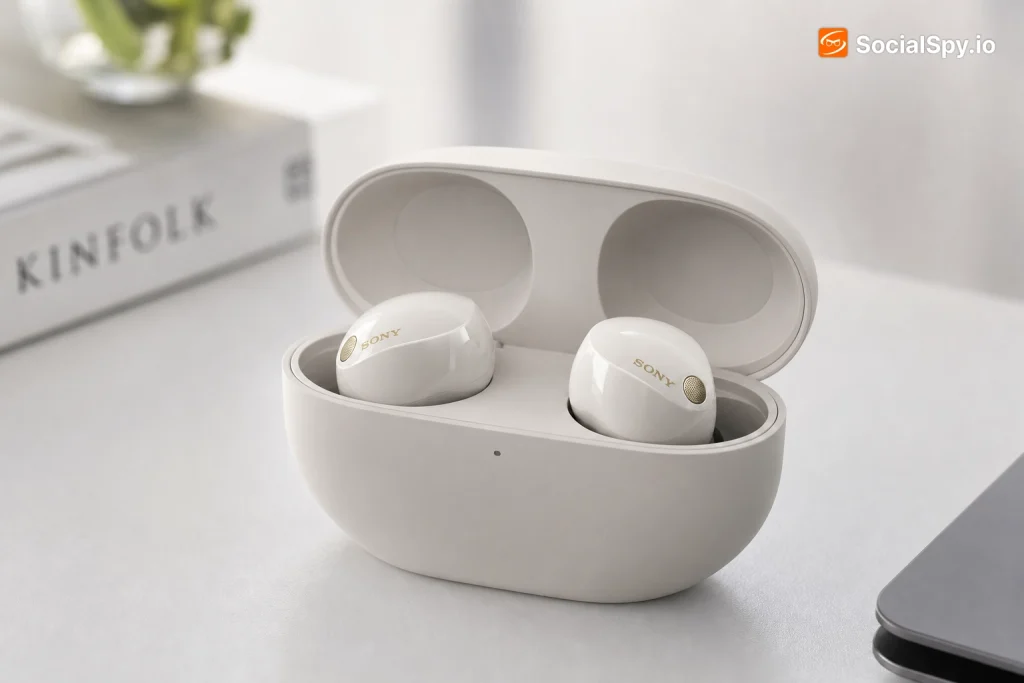
Sony’s earbuds strategy has stayed remarkably consistent: flagship noise cancellation, industry-leading codec support, and a companion app that actually adds value instead of just existing. The WF-1000XM6, released in 2025 as the successor to the well-regarded XM5, remains the halo product, typically priced around $299. Below it sits the LinkBuds S and newer LinkBuds Fit, aimed at people who want a smaller case and more athletic fit without giving up much sound quality.
What’s changed is the competitive pressure. Apple’s AirPods Pro 3 pushed hearing-aid-adjacent features and improved ANC that reviewers have called genuinely class-leading for wind noise reduction. Samsung’s Galaxy Buds3 Pro closed the gap on call quality using AI-based voice isolation. Bose, meanwhile, still wins on raw ANC depth in noisy environments like subway platforms and airplanes, even if its app ecosystem feels dated by comparison.
- Sony WF-1000XM6 — flagship ANC, LDAC support, adaptive sound control, roughly $299
- Sony LinkBuds S / Fit — smaller, sportier, roughly $199–$229
- Apple AirPods Pro 3 — best for iPhone users, roughly $249
- Samsung Galaxy Buds3 Pro — best for Galaxy users, roughly $249
- Bose QuietComfort Ultra Earbuds — deepest ANC, roughly $299
Industry audio reviewers consistently rank Sony and Bose as the two brands trading the ANC crown year over year, with Apple now firmly in that same tier for the first time.
The Sound Quality Argument
Sony’s real differentiator has never really been ANC alone — it’s the combination of hardware and software tuning. The XM6 uses a redesigned driver unit paired with Sony’s Integrated Processor V2, which the company says improves both noise cancellation and audio clarity simultaneously rather than trading one for the other.
The 360 Reality Audio format and DSEE Extreme upscaling (which uses on-device AI to restore detail lost in compressed streaming files) are still Sony exclusives that competitors haven’t fully matched. If you stream from Tidal or Amazon Music HD on an Android phone that supports LDAC, the difference is audible — closer to a hi-res wired listening experience than typical Bluetooth compression allows.
Where Sony Falls Short
Not everything favors Sony, though.
- iPhone users lose LDAC entirely — Apple doesn’t support the codec, so XM6 owners on iOS are capped at AAC quality, erasing much of Sony’s audio advantage.
- App bloat — the Sony | Headphones Connect app has grown feature-heavy over the years, and some users find the EQ and Adaptive Sound Control menus more confusing than Apple’s or Bose’s simpler interfaces.
- Call quality — Sony has historically lagged behind Apple and Samsung in voice pickup during windy or noisy conditions, though the XM6 narrowed this gap somewhat with added bone-conduction sensors.
For a deeper breakdown of what actually separates budget earbuds from premium ones, this guide on how to tell if wireless earbuds are worth the price difference is a useful companion read before comparing Sony against cheaper alternatives.
Noise Cancellation: Sony vs. the Field in 2026
This is the category Sony built its reputation on, and it’s still genuinely elite — but “elite” now means something different than it did in 2021.
| Brand & Model | ANC Strength | Best Use Case |
|---|---|---|
| Sony WF-1000XM6 | Excellent, adaptive to environment | Daily commuting, office noise |
| Bose QC Ultra Earbuds | Deepest low-frequency blocking | Air travel, subways |
| AirPods Pro 3 | Excellent, best wind resistance | Outdoor use, iPhone users |
| Galaxy Buds3 Pro | Strong, AI voice isolation | Calls, Android/Samsung users |
Sony’s Adaptive Sound Control automatically adjusts ANC intensity based on detected activity — walking, running, sitting still, or being in transit — using onboard accelerometers. It’s a feature Sony pioneered years ago that competitors have since copied in various forms, but Sony’s implementation still reacts faster and more accurately in most independent testing.
If you’re specifically shopping around ANC as your top priority rather than getting swept up in brand loyalty, it’s worth reading up on what to actually look for in noise-cancelling wireless earbuds before locking in on any single manufacturer, Sony included.
Battery Life, Durability, and Real-World Use
On paper, Sony’s numbers are respectable but not chart-topping.
- WF-1000XM6: roughly 8 hours per charge with ANC on, 24 hours total with the case
- LinkBuds S: roughly 6 hours per charge, 20 hours with case
- AirPods Pro 3: roughly 6 hours per charge, 24-30 hours with case (varies by ANC use)
- Galaxy Buds3 Pro: roughly 7 hours per charge, 26 hours with case
Sony sits comfortably mid-pack here. It’s not a weakness exactly, but it’s not the reason to pick Sony over a rival either.
Durability is a stronger story. The XM6 carries an IPX4 rating, meaning it can handle sweat and light rain but not submersion — fine for gym use, not for swimming. The LinkBuds Fit line, aimed more directly at runners, bumps this up and adds a more secure wingtip fit that competes directly with the Beats Fit Pro and Jabra’s sport-focused lineup.
- Sony’s charging case uses USB-C with wireless charging support on the XM6
- Battery health management software slows long-term degradation, similar to what smartphone makers now build in
- Sony still doesn’t offer swappable ear tip sizes as generously as Bose, which ships more tip options per box
Ecosystem Lock-In: The Real Deciding Factor
Here’s the part that matters more than most spec sheets suggest. Wireless earbuds in 2026 aren’t just audio accessories — they’re deeply tied to the phone ecosystem you’re already in, and that changes what “worth it” even means.
If you own an iPhone, Apple’s earbuds get advantages Sony simply cannot replicate: instant pairing across devices, Find My integration, automatic switching between iPhone, iPad, and Mac, and full support for Apple’s spatial audio head-tracking in supported content. Sony’s earbuds work fine with iPhones, but you’re leaving ecosystem conveniences on the table.
Samsung Galaxy owners get a similar story with Buds3 Pro — deeper integration with Samsung’s SmartThings ecosystem, One UI settings panels, and 360 Audio features tuned specifically for Samsung’s own content partnerships.
The single biggest factor in whether Sony is “worth it” isn’t the earbuds themselves — it’s what phone is in your pocket.
Sony’s advantage shows up clearest for people who:
- Use Android phones from brands other than Samsung (Pixel, OnePlus, Motorola, etc.)
- Stream lossless or hi-res audio regularly through LDAC-compatible apps
- Want granular EQ and sound customization rather than a locked-down simple experience
- Don’t care about seamless multi-device switching across a single brand’s hardware family
If none of those apply to you, and you’re already living inside Apple’s or Samsung’s ecosystem, the practical case for Sony gets weaker even if the earbuds themselves are technically excellent. This tension — great hardware versus ecosystem gravity — is the same dynamic reshaping other categories too, similar to how foldable phones succeed or fail based on how well they fit into a buyer’s existing habits rather than specs alone.
Price and Value Positioning in 2026
Sony hasn’t tried to compete on price the way Soundcore or JLab does, and that’s a deliberate choice. The company positions itself firmly in the premium tier alongside Apple and Bose, rather than chasing budget shoppers.
Where the Money Actually Goes
- $299 flagship tier (XM6): you’re paying for LDAC, DSEE Extreme, adaptive ANC, and Sony’s most refined driver hardware
- $199-229 mid-tier (LinkBuds S/Fit): smaller form factor, slightly reduced ANC depth, same core software features
- Sub-$150 budget alternatives from other brands: often get you 80% of the ANC performance for half the price, but lose LDAC, weaker app support, and shorter software update lifespans
That last point matters more than shoppers usually realize. Sony has a track record of pushing firmware updates to its flagship earbuds for 3-4 years after release, improving ANC algorithms and adding features like Adaptive Sound Control retroactively to older models. Budget brands frequently abandon software support within 12-18 months.
- If you keep earbuds for 3+ years, Sony’s longer support window adds real value
- If you replace earbuds every year or two anyway, that advantage matters much less
- Resale value on Sony’s XM-series also tends to hold better than most competitors, thanks to steady demand from audio enthusiasts
Conclusion
Sony hasn’t lost its edge in 2026 — it’s just no longer competing in a category where it’s the obvious default choice. The WF-1000XM6 and LinkBuds lineup remain genuinely excellent pieces of engineering, with sound customization and ANC responsiveness that still beat most of the market on pure technical merit.
What’s shifted is the calculation buyers need to make. Five years ago, choosing Sony was close to a no-brainer for anyone serious about audio quality. Today, that decision runs through a filter of ecosystem lock-in first, audio priorities second — and for a growing share of buyers already anchored to Apple or Samsung hardware, the practical case for switching to Sony has gotten noticeably thinner, even when Sony’s earbuds are objectively the better piece of hardware sitting on the shelf next to them.
The honest verdict: Sony earns its price tag for Android users outside the Samsung ecosystem, audio enthusiasts who stream lossless content, and anyone who values long-term software support over brand convenience. For everyone else, it’s a genuinely great product competing against options that simply fit their existing life more easily.
FAQ
For Android users who stream hi-res or lossless audio and want the best-in-class ANC customization through Sony’s app, yes — the LDAC support and Adaptive Sound Control justify the price. For iPhone users, the value drops noticeably since LDAC isn’t supported on iOS, making a cheaper AirPods Pro 3 or even Sony’s own LinkBuds S a more sensible pick.
They’re close to a tie in 2026, with Sony still slightly ahead in adaptive, activity-based ANC tuning while Apple has caught up significantly on wind noise resistance and overall consistency. The bigger differentiator isn’t raw ANC performance anymore — it’s ecosystem integration, where AirPods Pro win decisively for iPhone owners.
For most casual listeners, yes — the LinkBuds S or Fit deliver roughly 85-90% of the flagship’s sound quality and ANC performance at $70-100 less. The XM6 is really aimed at people who specifically want LDAC hi-res streaming and the most granular EQ control, which casual listeners often won’t notice or use.