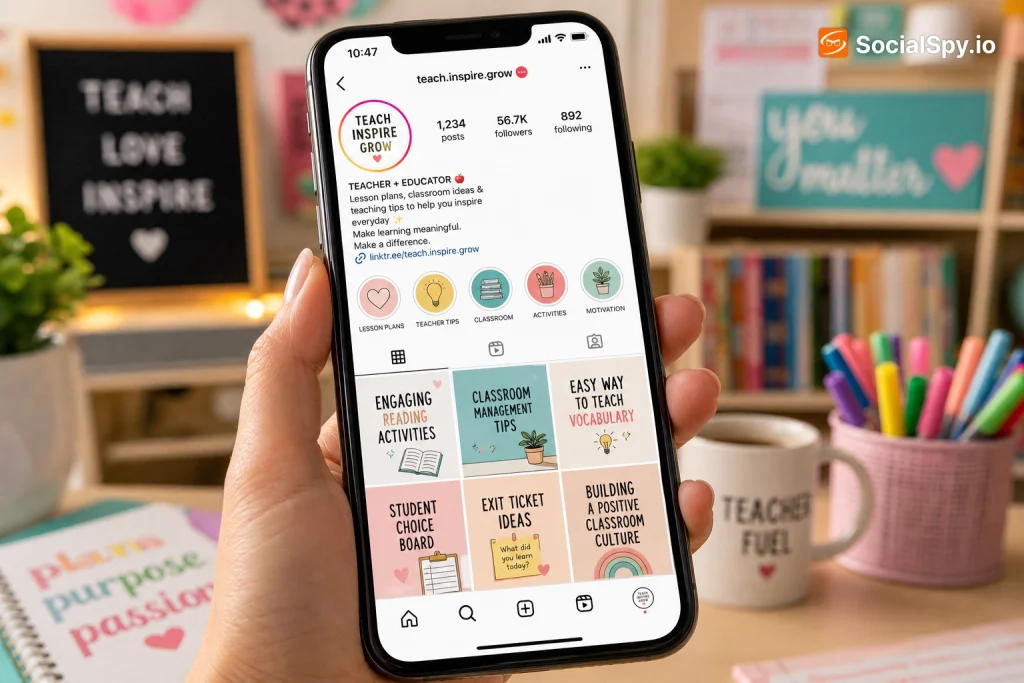
Teacher accounts have become one of Instagram’s quietly booming niches, with classroom-decor reveals, anchor charts, and “day in the life” reels pulling in millions of views from other educators hungry for ideas. What used to be a Pinterest-only hustle has migrated to Instagram because the algorithm now rewards short-form video, and teachers who figured that out early have turned side hustles into six-figure Teachers Pay Teachers (TPT) storefronts. Starting one the right way — legally, safely, and with a growth plan — takes more than posting a cute bulletin board photo and hoping for the best.
Why Teacher Accounts Are Exploding Right Now
Education content has quietly become one of Instagram’s most reliable engagement categories, sitting alongside cooking and home organization in terms of watch-through rate on Reels. Part of this is structural: teachers make things — worksheets, decor, classroom systems — that are inherently visual and easy to demonstrate in a 30-second clip.
The other driver is money. TPT reported that its top sellers can earn well into six figures annually, and Instagram has become the primary funnel that drives buyers to those storefronts, replacing the slower, SEO-dependent traffic Pinterest used to send. Meta’s continued push to compete with TikTok, detailed in Instagram Reels vs TikTok: Which Platform Wins Creators in 2026, means Reels from smaller accounts are still getting pushed into non-follower feeds far more generously than static posts.
Industry analysts tracking creator-economy niches note that education and “edutainment” accounts have some of the highest save-and-share rates on Instagram, because teachers actively screenshot and bookmark ideas to use later in their own classrooms.
Here’s what’s fueling the niche’s growth in concrete terms:
- Low production barrier: a phone, a classroom, and natural lighting are enough to start.
- Built-in community: teachers follow and support each other at high rates, driving organic reach.
- Recurring content calendar: back-to-school, holidays, testing season, and report cards give a year-round content rhythm.
- Clear monetization path: TPT, Amazon storefronts, and paid curriculum bundles convert followers into revenue quickly.
Choosing a Niche That Actually Stands Out
The single biggest mistake new teacher-influencers make is trying to appeal to “all teachers.” The accounts that grow fastest are hyper-specific, because Instagram’s discovery algorithm rewards accounts it can easily categorize and match to interested viewers.
Pick Your Lane
Before posting anything, decide which of these describes your account:
- Grade-band specific (kindergarten, 3rd grade, middle school ELA)
- Subject specific (special education, STEM, world languages, music)
- Format specific (classroom decor, behavior management, test prep)
- Lifestyle-adjacent (new teacher survival, teacher burnout/wellness, homeschool)
Research Before You Commit
Spend a week studying five to ten accounts already in your intended niche.
- Note their follower count versus average Reel views — a big gap can mean an underserved niche.
- Check their pinned posts to see what content types they lean on most.
- Read comments to find recurring questions or complaints; that’s your content roadmap.
- Look at whether they sell products, run ads, or do both — it tells you the niche’s monetization ceiling.
Setting Up the Account Correctly From Day One
Getting the technical setup right early saves months of rebuilding later, especially around analytics and monetization eligibility.
| Setting | Recommendation | Why It Matters |
|---|---|---|
| Account type | Instagram Professional (Creator) account | Unlocks Insights, Reels bonuses, and link-in-bio tools |
| Handle | Short, brand-adjacent, not tied to real full name | Easier to trademark and protect long-term |
| Bio link | Linktree, Beacons, or direct TPT store | Central hub for products and freebies |
| Category tag | “Educator” or specific subject tag | Helps Instagram’s algorithm categorize your content |
| Contact info | Business email, not personal | Keeps brand deals and school matters separate |
A few setup details deserve extra emphasis:
- Separate from your personal account. Never link your teacher-brand page to a personal profile filled with family photos; district administrators and parents will find it.
- Turn on two-factor authentication. Education accounts get impersonated and phished at a higher-than-average rate because of the trust factor with parents.
- Claim your handle across platforms early, even if you only plan to post on Instagram for now — cross-platform name squatting is common in the teacher-influencer space.
Staying on the Right Side of District Policy and Student Privacy
This is the section most new teacher-creators skip, and it’s the one that causes real career consequences. Districts across the country have tightened social media policies since 2022, and student privacy — specifically FERPA (the Family Educational Rights and Privacy Act) — governs what you can legally show.
Before posting a single classroom photo, confirm these basics:
- Check your district’s social media and outside-employment policy. Many require disclosure or approval before running an education-content account, even one that never shows students.
- Never show identifiable student faces or work with names visible, without signed media-release forms on file — and even then, many creators still blur faces as a default habit.
- Avoid posting anything that reveals your school’s exact location, room number, or class schedule in a way that compromises student safety.
- Keep your “brand” persona separate from your real teaching identity where district rules require it — some successful accounts use a first name only, or no name at all.
- Don’t discuss specific students’ behavior or performance, even anonymized, if it could be identifiable to parents or colleagues in your building.
A growing number of districts now explicitly ask teachers to disclose monetized social accounts, treating them similarly to outside tutoring jobs — check your employee handbook, not just common sense.
Getting this wrong isn’t hypothetical. Multiple teachers nationwide have faced formal reprimands or non-renewal of contracts over Instagram content that violated student-privacy expectations, even when the intent was purely educational. Play it conservative, especially in your first year.
Building a Content System That Actually Grows
Consistency beats perfection on Instagram, but consistency without strategy just produces noise. Successful teacher accounts run on a repeatable content system rather than random daily inspiration.
The Core Content Mix
A well-rounded teacher page typically rotates through four content types:
- Reels (40-50% of posts): classroom transformations, “things I wish I knew my first year,” quick teaching hacks, transition songs, or organization tours.
- Carousels (25-30%): step-by-step lesson breakdowns, printable previews, “swipe for the template,” or myth-vs-reality slides.
- Stories (daily): behind-the-scenes moments, polls asking followers what they want to see, countdown stickers for launches.
- Static posts (10-15%): quote graphics, classroom decor flat-lays, product mockups.
A Sample Weekly Posting Cadence
- Monday — Reel: a relatable classroom-life moment or “Monday reset” routine.
- Wednesday — Carousel: a teaching strategy or free resource breakdown.
- Friday — Reel: transformation or “what my classroom looked like before/after.”
- Daily — 2-3 Stories minimum, using polls and question stickers to build reply habits.
Hashtags still matter less than they did in 2019, but a mix of 3-5 niche tags (like #thirdgradeteacher or #specialeducationteacher) combined with strong on-screen text and captions optimized for search still helps discovery, since Instagram now indexes captions for its search bar much like a search engine.
Growing Followers and Turning Them Into Income
Growth on Instagram in 2025 and beyond rewards accounts that get saved and shared, not just liked — Meta executives have repeated this publicly multiple times when discussing Reels ranking signals. For teacher content specifically, “save this for later” is a natural, believable call-to-action, and creators should use it deliberately.
Growth Tactics That Work in This Niche
- Collaborate with other teacher accounts via Instagram’s Collab post feature, instantly doubling reach for a single piece of content.
- Reply to every comment in the first hour after posting — Instagram’s ranking still weights early engagement velocity heavily.
- Repost your best Reels to TikTok and Pinterest with light edits; teacher audiences overlap heavily across all three platforms.
- Time back-to-school and holiday content 4-6 weeks early, since teachers plan and shop for their classrooms well ahead of the actual season.
Monetization Paths, Ranked by How Achievable They Are
- TPT store traffic — the most direct path; even a few thousand engaged followers can meaningfully lift a TPT storefront’s monthly sales.
- Instagram Bonuses and in-app monetization — available in select regions once follower and engagement thresholds are met.
- Affiliate links (Amazon Influencer Program, classroom-supply brands) — strong fit given how much classroom-decor content already sells indirectly.
- Sponsored posts with edtech and supply companies — brands like classroom-furniture makers, sticker companies, and reading-app startups actively seek micro-influencer teachers with 5,000-50,000 followers, often paying more per-follower than lifestyle influencers because the audience is so purchase-motivated.
- Paid community or coaching — Discord groups, courses for new teachers, or 1:1 consulting once the account establishes authority.
The economics genuinely favor smaller, niche-specific accounts here. Brands courting teacher audiences generally prefer several 10,000-follower niche accounts over one 200,000-follower generalist page, because the engagement and purchase intent run higher — a dynamic increasingly visible across recruiting and hiring too, as covered in How Lightspeed found its newest hire … via Instagram DM, where niche-specific audiences proved more valuable than raw follower counts.
Conclusion
The teacher Instagram niche rewards specificity, consistency, and caution in roughly equal measure. Pick a lane narrow enough that Instagram’s algorithm can confidently categorize you, build a posting rhythm you can sustain through an actual school year — not just summer break — and treat district policy and student privacy as non-negotiable guardrails rather than afterthoughts. The accounts that turn into real income streams aren’t necessarily the most polished ones; they’re the ones that stayed consistent for 12-18 months while steadily building a TPT store, affiliate links, or brand relationships alongside the content itself. Start smaller and stricter than you think you need to, and let growth data — not guesswork — tell you when to expand your niche.
FAQ
Many districts require disclosure of outside employment or monetized social media activity, so check your employee handbook or ask HR before launching, especially if you plan to sell products or accept sponsorships. Even accounts that never show student faces can trigger district review if they identify your school or classroom.
Meaningful TPT traffic can start with just a few hundred highly engaged followers in your specific niche, while brand sponsorships typically become realistic somewhere between 5,000 and 10,000 followers. Engagement rate and niche relevance matter far more to brands than raw follower count in the education space.
It’s optional and depends on your comfort level and district policy — many successful accounts use a first name only or no name at all to keep some separation from their real teaching identity. Showing your face generally builds trust and boosts engagement, but plenty of large accounts grow successfully using only hands, classroom shots, and voiceovers.