iPhone 13 Pro Max Battery Basics
The iPhone 13 Pro Max carried the largest battery Apple had shipped in an iPhone up to that point, paired with the first 120Hz ProMotion display on any iPhone. That combination made it one of the best real-world battery performers in Apple's lineup at launch, and the battery story here is mostly about how well that large cell has held up several years in.
What Made the iPhone 13 Pro Max Special
The 13 Pro Max introduced ProMotion - Apple's first 120Hz adaptive refresh display on an iPhone - alongside the largest battery in the lineup at the time, a smaller notch, and macro photography on its upgraded triple-camera system. It set the template that later Pro Max models would build on for both display technology and all-day battery life.
How the iPhone 13 Pro Max Battery Ages
The battery is a standard lithium-ion cell, rated to hold at least 80% of its original capacity through roughly 500 full charge cycles of typical use - the same aging curve as every other recent iPhone. ProMotion's adaptive refresh rate (scaling from 10Hz to 120Hz depending on what's on screen) was specifically designed to avoid a major battery penalty, so its presence here doesn't meaningfully change how the battery ages, only how efficiently that large capacity gets used day to day.
Signs You Need a Replacement
Because the battery starts so large, don't judge health purely by how the day feels - check Battery Health directly (Settings, then Battery, then Battery Health & Charging), since moderate wear is easy to not notice on a cell this size. A reading below 80% or unexpected shutdowns at non-zero charge are the clear, reliable signs that real replacement-worthy wear has set in.
What a Replacement Costs
As the top-tier model that generation, the Pro Max typically sits at the higher end of replacement pricing for the 13 lineup, reflecting its larger cell and denser Pro-model internal assembly. In-warranty or AppleCare+ coverage with Battery Health under 80% makes it free; independent shops are usually the most affordable option outside that coverage, with Apple or an authorized provider costing more but including a service warranty and genuine parts.
DIY vs. Professional Replacement
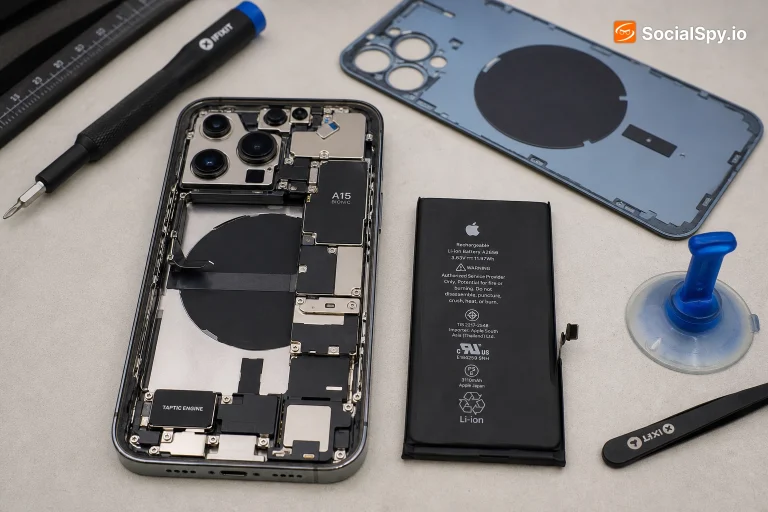
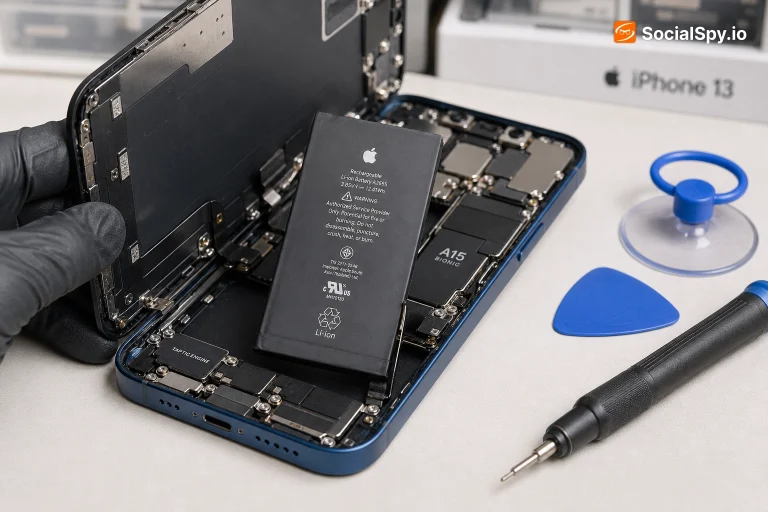
The 13 Pro Max uses the same stretch-release adhesive battery mounting as every iPhone since the X. Its larger body gives slightly more room to work than the compact Mini or standard 13, but the internal layout around the camera system and ProMotion display driver is still dense enough that a punctured cell from a forced prying tool remains a real fire risk - professional replacement stays the safer default unless you have prior repair experience.
Tips to Make It Last Longer
With a battery this large, protecting long-term health matters more than squeezing out daily runtime: avoid prolonged heat exposure, since that's still the single biggest accelerator of capacity loss regardless of battery size. Optimized Battery Charging, on by default, reduces time spent sitting at 100%, which helps a large cell age more gracefully. ProMotion doesn't need to be disabled for battery reasons - it's already built to scale down automatically for static content.
Is the iPhone 13 Pro Max Still Worth It in 2026?
The 13 Pro Max remains a strong performer in 2026 - ProMotion, the large battery, and the camera system were all genuinely ahead of their time and still hold up well today. If buying used, Battery Health is the main thing to check given the phone's age; a large but degraded battery can still underperform a smaller, fresher one, so don't assume size alone guarantees good battery life.
Frequently Asked Questions
Yes - it introduced 120Hz adaptive ProMotion displays to the iPhone lineup for the first time, alongside the 13 Pro.
Yes - at roughly 4,352mAh it's noticeably larger than the 13 Pro's roughly 3,095mAh, thanks to the Pro Max's bigger body.
Not significantly - the display's refresh rate scales down automatically for static content, so it was designed from the start to avoid a major battery penalty compared to a fixed 60Hz screen.