5GE sparked one of the most contentious branding fights in wireless history, and if you’re stumbling across the term in 2026, you’re probably either digging through old phone settings or trying to understand a piece of telecom history that still shapes how carriers market network speed today. The short version: it was never actual 5G. Here’s the full story of what it was, why it mattered, and where things stand now that real 5G has taken over.
What “5G E” Actually Meant
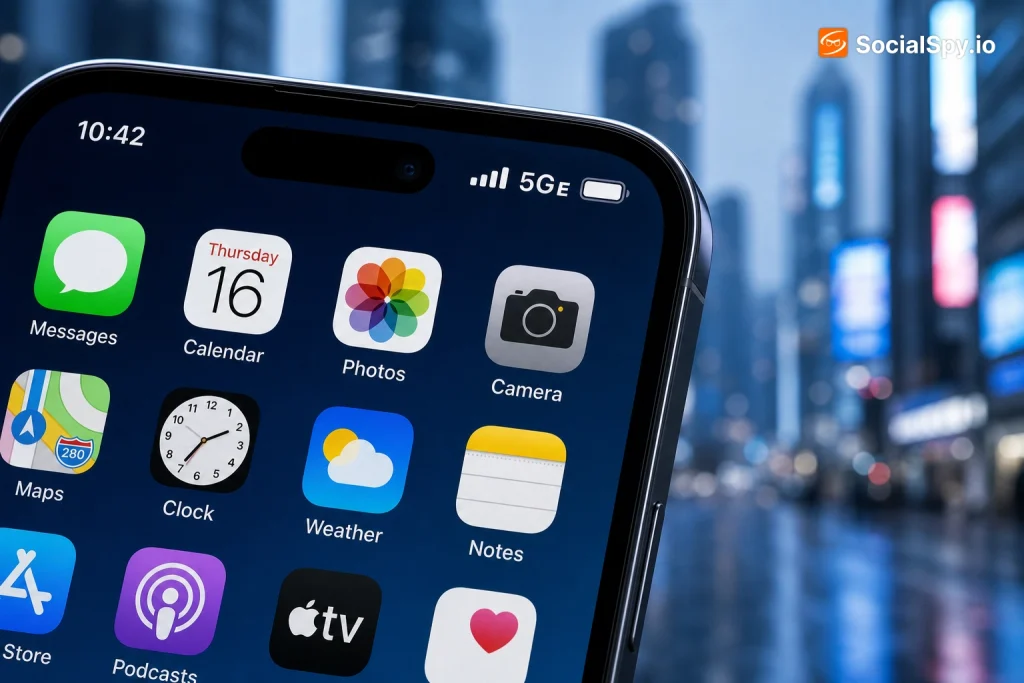
AT&T began flashing a “5G E” icon on select Android phones starting in January 2019, expanding a test that had quietly run in a handful of markets since 2017. The label stood for “5G Evolution,” and AT&T’s own fine print described it as a step toward 5G rather than 5G itself.
In practice, 5G E was just souped-up 4G LTE. It relied on a set of technologies collectively known as LTE-Advanced Pro, which had been part of the 3GPP standards roadmap for years before any carrier called it anything special.
- 4×4 MIMO: four antennas transmitting and receiving simultaneously instead of the standard two, roughly doubling capacity in good signal conditions.
- 256-QAM modulation: packing more data into each radio signal, similar to squeezing more letters into the same-sized envelope.
- 3-way carrier aggregation: combining three separate LTE frequency bands into one logical connection for higher peak throughput.
- Licensed Assisted Access (LAA): borrowing unlicensed 5 GHz spectrum (the same band Wi-Fi uses) to add extra capacity in dense areas.
Combined, these features could theoretically push peak speeds toward 400 Mbps, though real-world averages for 5G E users typically landed in the 30-40 Mbps range — noticeably better than basic LTE, but nowhere close to what true 5G eventually delivered.
Why It Set Off a Legal Firestorm
The backlash was immediate and fierce, largely because AT&T’s rivals were simultaneously investing billions in actual next-generation 5G New Radio (5G NR) infrastructure. Slapping a “5G” label on faster LTE looked, to competitors and regulators, like AT&T was claiming a technological leap it hadn’t made.
Industry analysts at the time called it one of the clearest examples of “5G-washing” — using next-gen branding on last-gen technology to shape consumer perception ahead of the real infrastructure race.
Sprint filed a federal lawsuit against AT&T in February 2019, alleging false advertising under the Lanham Act. Sprint’s own market research reportedly found that a meaningful share of consumers believed 5G E phones were running on an actual 5G network, which was untrue.
The dispute also went to the National Advertising Division (NAD) of the BBB National Programs, an industry self-regulatory body that reviews advertising claims. Key developments included:
- The NAD recommended AT&T discontinue the 5G E mobile app icon and related advertising, finding the claims could mislead consumers.
- AT&T disagreed with the recommendation but said it would comply with certain aspects while appealing others.
- Sprint and AT&T eventually settled their federal lawsuit under confidential terms rather than proceeding to trial.
- AT&T continued using the 5G E icon on devices for roughly three more years despite the criticism.
5G E vs. Real 5G: The Technical Gap
The confusion made sense on paper because both technologies shared the “5” and “G.” Underneath, they were built on entirely different foundations.
| Feature | 5G E (LTE-Advanced Pro) | True 5G (5G NR) |
|---|---|---|
| Core network | Same 4G core, no new architecture | New standalone (SA) core in modern deployments |
| Typical speeds | 30-40 Mbps average | 100-900 Mbps mid-band, multi-Gbps mmWave |
| Latency | ~30-50ms | As low as 10-20ms on SA networks |
| Spectrum used | Existing LTE bands + unlicensed 5 GHz | New sub-6GHz (C-band, 2.5GHz) and mmWave (24-40GHz) |
| Standards body classification | Pre-5G (Release 13/14 LTE features) | 3GPP Release 15+ 5G NR standard |
The distinction matters because real 5G wasn’t just “faster LTE” — it introduced structural changes like network slicing, massive device density support (useful for IoT), and dramatically lower latency that enables things like cloud gaming and real-time industrial automation. None of that existed under the 5G E umbrella.
The Rollout Race That Made 5G E Necessary
To understand why AT&T reached for the 5G E label at all, it helps to remember the competitive pressure in 2018 and 2019. Verizon had launched a fixed-wireless mmWave 5G product in select cities in late 2018, and T-Mobile was racing toward its Sprint merger specifically to acquire Sprint’s valuable 2.5GHz mid-band spectrum for a nationwide 5G buildout.
AT&T’s actual mobile 5G network launched in December 2018 but was initially limited to a small number of business customers with specialized hardware in a handful of cities. That left a gap of roughly a year where AT&T had little consumer-facing 5G to show off, and 5G E filled that marketing vacuum.
- 2017: Early LTE-Advanced Pro testing begins quietly in select markets.
- December 2018: AT&T launches limited mobile 5G for business users in 12 cities.
- January 2019: 5G E icon rolls out broadly on compatible Android devices.
- February 2019: Sprint sues AT&T over the branding.
- 2020: AT&T’s real mobile 5G network expands to reach over 200 million people.
- 2022: 5G E branding is largely phased out as true 5G coverage becomes the default experience.
By the time AT&T’s genuine 5G network matured, the company had little incentive to keep the confusing label around, and it quietly disappeared from most devices and marketing materials.
Where Things Stand in 2026
Today, the 5G E icon is essentially extinct. AT&T’s real 5G network now blankets the vast majority of the U.S. population, and the carrier has spent years deploying mid-band C-band spectrum to boost both coverage and speed well beyond what 5G E ever offered.
What replaced it
Modern AT&T devices display simply “5G” for standard coverage, with additional labeling for enhanced tiers in areas with denser spectrum deployment — mirroring the approach Verizon uses with its “5G UC” (Ultra Wideband) designation for mmWave and C-band zones. T-Mobile similarly distinguishes its “Ultra Capacity” 5G from standard nationwide 5G.
- Standalone 5G (5G SA) cores are now common across major carriers, unlocking lower latency and network slicing features that weren’t possible on the older non-standalone architecture.
- C-band spectrum deployment, which accelerated heavily from 2022 through 2025, now delivers average real-world 5G speeds well above 200 Mbps in most metro areas.
- Fixed wireless access (FWA) built on true 5G infrastructure has become a mainstream home internet alternative, something 5G E’s LTE-based technology was never robust enough to support at scale.
- Regulatory scrutiny around network-speed marketing claims remains active, with the FCC and FTC continuing to push for clearer, more standardized disclosure of network performance to consumers.
If you still see “5G E” somewhere
It’s rare, but if an older device or archived screenshot shows the icon, know that it reflects a network technology that’s now largely retired from AT&T’s active branding. Any phone still connecting that way today is almost certainly falling back to legacy LTE infrastructure in an area without full 5G coverage, not receiving some special enhanced service.
Conclusion
5G E was never a technology failure — LTE-Advanced Pro genuinely improved network performance for millions of users during the transition period between 4G and true 5G. The failure was one of honesty in labeling, and it became a cautionary case study that telecom marketing teams, competitors, and regulators still reference when evaluating how carriers describe network generations. The episode also foreshadowed a pattern that’s repeated with newer terms like “5G+”, “5G UC,” and various carriers’ claims about “5G Advanced” readiness — consumers should always ask what specific technology sits behind a marketing label, because the letter-and-number combination on a status bar rarely tells the whole story on its own.
FAQ
No. 5G E was AT&T’s marketing name for an enhanced version of 4G LTE technology, built on LTE-Advanced Pro features like 4×4 MIMO and 256-QAM modulation. It did not use the 5G New Radio standard, new spectrum bands, or the network architecture required to be classified as true 5G under 3GPP standards.
As AT&T’s real 5G network expanded to cover the vast majority of the U.S. population through 2020-2022, particularly after major C-band spectrum deployments, the company had far less need to market an interim technology. The persistent legal and regulatory criticism, including a lawsuit from Sprint and a negative finding from the National Advertising Division, also made continued use of the label increasingly difficult to justify.
Carriers still use tiered 5G branding like Verizon’s “5G UC” and T-Mobile’s “Ultra Capacity,” but these labels distinguish between different real 5G spectrum tiers rather than mislabeling 4G LTE as 5G. Regulators continue to monitor network marketing claims, so it’s still smart to check independent speed test data for your area rather than relying solely on the icon your phone displays.