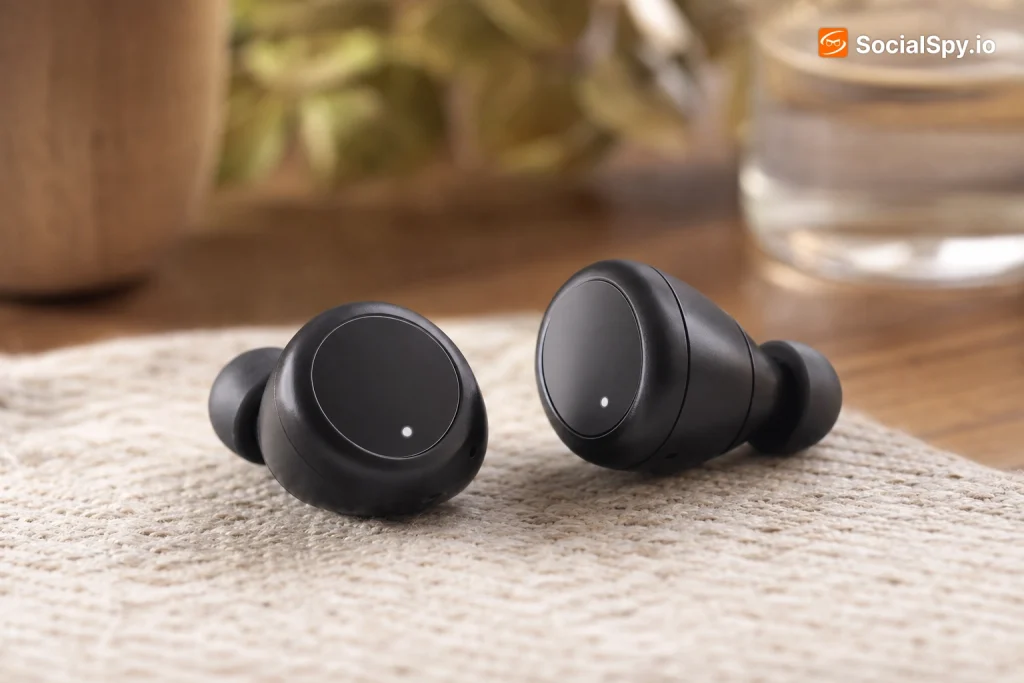
Compact true wireless earbuds have taken over the market shelf space that bulkier models like the original Apple AirPods Pro and Sony WF-1000XM3 used to dominate. Brands from Samsung to Beats to no-name Amazon sellers now race to shrink stem length and case size, but that miniaturization comes with real engineering tradeoffs most shoppers never see coming.
Why Earbuds Got So Small in the First Place
The compact earbud trend didn’t happen by accident. Once Apple shrank the AirPods Pro 2 stem in 2022 and Samsung followed with the Galaxy Buds 2 Pro, the entire industry treated “smaller footprint” as the next battleground after noise cancellation.
Manufacturers had strong incentives to chase this:
- Comfort marketing — smaller buds photograph and feel less obtrusive in ads and unboxing videos
- Fit inclusivity — smaller housings work across more ear shapes, cutting return rates tied to poor seal
- Perceived premium-ness — a tiny titanium-look case feels more “Apple-like” than a chunky plastic puck
- Component miniaturization — 6mm-8mm dynamic drivers and smaller lithium-polymer cells became cheap enough to mass-produce
That last point matters most. A decade ago, packing Bluetooth 5.x radios, active noise cancellation (ANC) chips, and a usable battery into a bud under 4 grams was nearly impossible. Now it’s routine, but the laws of physics on battery capacity and driver size haven’t changed nearly as fast as marketing claims have.
The Real Tradeoffs Nobody Puts on the Box
Smaller housings mean smaller batteries and smaller drivers, full stop. This is the tradeoff every buyer needs to understand before comparing spec sheets.
Industry audio engineers who’ve reverse-engineered competing earbuds consistently note that shrinking the driver by even 2mm can measurably reduce sub-bass output below 100Hz, which is exactly the range most listeners associate with “punchy” sound.
Here’s how the tradeoff typically plays out across categories:
Battery Life
Compact buds like the Samsung Galaxy Buds 3 or the smaller-format Beats Solo Buds often run 5 to 6 hours per charge on the buds themselves, compared to 8 to 10 hours on larger competitors like the Sony WF-1000XM5 or Bose QuietComfort Ultra Earbuds. Case size shrinks too, which cuts total battery reserves from roughly 30+ hours down to 18-24 hours.
Bass and Sound Signature
Smaller dynamic drivers (typically 6mm) physically move less air than 10-11mm drivers found in larger designs. Brands compensate with EQ tuning and “bass boost” software modes, but that’s digital amplification papering over a hardware limitation, not a real fix.
Noise Cancellation Depth
ANC needs multiple microphones and processing headroom, both of which are easier to fit in a bigger housing. Compact buds tend to cancel high-frequency drone (airplane engines, HVAC hum) well but struggle more with low-frequency rumble and sudden transient noise like voices.
Compact vs. Standard: A Direct Comparison
| Factor | Compact Earbuds | Standard/Flagship Earbuds |
|---|---|---|
| Typical weight per bud | 3.5g – 4.5g | 5.5g – 7g |
| Bud-only battery life | 5-6 hours | 8-10 hours |
| Driver size | 6mm | 10-11mm |
| ANC depth | Moderate | Strong |
| Fit for small ears | Excellent | Fair to poor |
| Price range (2025-2026) | $80-$180 | $200-$300 |
This table oversimplifies individual products, obviously — some compact designs punch above their weight class. But as a baseline expectation, it’s remarkably consistent across brands and price tiers.
Who Compact Earbuds Actually Make Sense For
Fit is the single biggest reason people abandon wireless earbuds entirely, more than sound quality or price. If a $250 flagship falls out during a run because your ear canal is smaller than average, it’s worthless to you regardless of its driver size.
Compact earbuds solve a real, physical problem for a large chunk of the population:
- Smaller or narrower ear canals — common among many women and some Asian and petite-frame users, according to audio-fit studies cited by hearable manufacturers
- Glasses wearers — shorter stems and lower-profile housings interfere less with temple arms
- Active users — runners and gym-goers benefit from reduced protrusion and lower chance of impact dislodging the bud
- Sleep and side-sleeping use — some ultra-compact in-ear designs (like Bose Sleepbuds-style products) exist specifically because standard earbuds are unusable lying down
- First-time buyers on a budget — sub-$100 compact models from Anker Soundcore, JLab, and Skullcandy deliver “good enough” sound without flagship pricing
If you fall into any of these groups, the tradeoffs described above are frequently worth accepting. A slightly weaker bass response is a fair price for buds that don’t physically fall out of your ears every third song.
Who Should Skip the Compact Trend
Not every use case rewards a smaller footprint, and some buyers will feel every one of those tradeoffs acutely.
- Audiophiles chasing bass-heavy genres (hip-hop, EDM, dubstep) will likely notice the driver limitation immediately
- Frequent flyers and commuters relying on deep ANC for engine drone will get better real-world isolation from larger flagship designs — this is covered in more depth in Wireless Earbuds with Active Noise Cancelling: What to Look For
- All-day remote workers on calls may prefer larger buds with more microphones for better call clarity, since compact designs often cut a mic or two to save space
- Long-haul travelers who need 8+ hours of continuous playback without recharging will find compact case batteries limiting on international flights
For these users, chasing a smaller silhouette actively works against the listening experience they’re paying for. It’s worth being honest about which category you fall into before letting a sleek product photo make the decision for you.
Price Doesn’t Always Track With Size — Here’s the Real Math
A common assumption is that compact earbuds are automatically cheaper because they use less material. That’s only sometimes true.
Apple’s AirPods Pro 2, at $249, are relatively compact and among the most expensive mainstream earbuds on the market. Meanwhile, some larger-format budget buds from brands like Soundcore sell for under $60. Size and price are not the same axis, even though marketing often implies they are.
What actually drives price:
- Chipset generation — newer Bluetooth codecs (LC3, aptX Adaptive) and ANC processors cost more regardless of housing size
- Brand ecosystem lock-in — Apple and Samsung charge a premium for seamless device pairing (spatial audio, auto-switching) independent of physical dimensions
- Certification and materials — IPX water resistance ratings and premium finishes (ceramic, titanium coatings) add cost at any size
This is why the price-difference question deserves its own scrutiny beyond just size; for a deeper breakdown of when a higher price tag actually buys something real versus just branding, see How to Tell If Wireless Earbuds Are Worth the Price Difference.
What Reviewers and Early Adopters Are Actually Saying
Early hands-on impressions of the newest compact flagships — including Samsung’s Galaxy Buds3 line and Beats’ shrunken Solo Buds — have been notably mixed compared to the marketing push around them.
Tech reviewers testing compact 2025-generation earbuds have generally praised comfort gains but flagged battery life and bass depth as the two most common complaints in side-by-side testing against previous, bulkier generations from the same brand.
A few consistent patterns show up across independent testing and user forums:
- Comfort complaints dropped significantly compared to previous bulkier generations
- Battery life complaints rose in almost direct proportion
- Bass-focused listeners reported needing to enable EQ presets that weren’t necessary on older, larger models
- Call quality held up reasonably well thanks to AI-based noise suppression software offsetting fewer physical microphones
This software compensation trend is worth watching. Brands increasingly use machine learning voice isolation and adaptive EQ to make up for what smaller hardware physically can’t do, and in many cases it works well enough that the compromise becomes invisible in daily use.
Conclusion
Compact true wireless earbuds aren’t a downgrade dressed up as an upgrade — they’re a genuine specialization aimed at comfort and fit rather than raw audio performance or endurance. The mistake most buyers make is assuming “newer and smaller” automatically means “better in every category,” when in reality it’s a deliberate hardware tradeoff that favors a specific type of listener.
If you’ve bounced between three pairs of earbuds because none of them stayed in your ears, a compact design solves your actual problem better than another spec bump ever will. But if you’re chasing deep bass, all-day ANC on flights, or maximum battery runtime without a case top-up, a bulkier flagship earbud still wins on pure numbers, and no amount of software EQ trickery fully closes that gap yet.
FAQ
Generally yes, in measurable ways — smaller 6mm drivers move less air and produce less natural sub-bass than 10-11mm drivers found in larger flagship earbuds, though software EQ tuning narrows the gap for casual listening.
Yes, for most people with average or smaller ear canals, compact designs typically stay more secure because there’s less mass pulling the bud out during movement, which is one of the main reasons the category has grown so quickly.
It depends on your ecosystem and use case — paying premium prices makes sense if you rely on features like seamless multi-device switching or spatial audio, but if you just want a secure, comfortable fit, sub-$150 compact options from brands like Anker Soundcore or JLab deliver similar comfort gains at a fraction of the cost.