Quantum computing is not just a buzzword; it represents a monumental shift in our approach to solving complex problems. While classical computers have served us well for decades, the limitations of binary processing are becoming increasingly evident. This article explores the fundamentals of quantum computing, its potential applications, and what it means for the future of technology.
What is Quantum Computing?
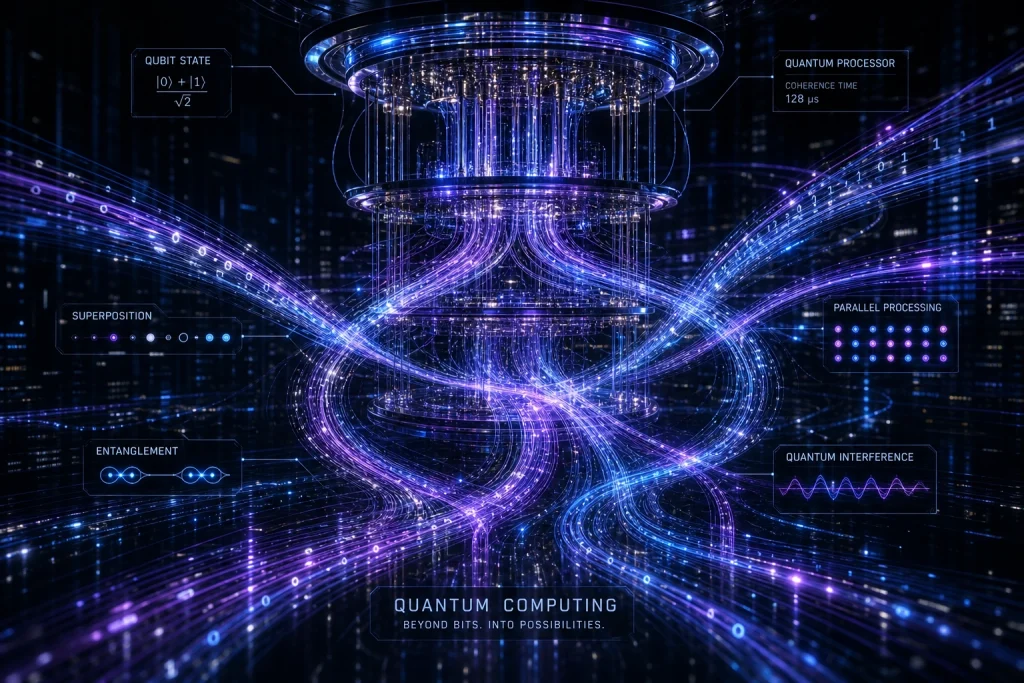
At its core, quantum computing leverages the principles of quantum mechanics to process information. Unlike classical computers that rely on bits as the smallest unit of data, quantum computers use qubits. Qubits can exist in multiple states at once, thanks to the quantum phenomena known as superposition and entanglement.
Here is a simplified breakdown of key quantum concepts:
- Superposition: This allows qubits to represent both 0 and 1 simultaneously, exponentially increasing the computing power.
- Entanglement: A unique quantum state where two qubits become interconnected such that the state of one instantly influences the state of the other, regardless of distance.
- Quantum Interference: The ability to amplify correct paths and cancel out wrong ones during computation, optimizing problem-solving processes.
Potential Applications of Quantum Computing
Quantum computing has the potential to revolutionize numerous fields by providing solutions that are currently impossible or impractical for classical computers. Here are some areas where quantum computing could make a significant impact:
Cryptography
Current encryption methods rely on the difficulty of factoring large numbers, a task classical computers struggle with. Quantum computers could break these codes in a fraction of the time, necessitating the development of new quantum-resistant encryption algorithms.
Drug Discovery and Material Science
Quantum computing can simulate molecular interactions at a level of precision unattainable by classical computers, accelerating drug discovery and the development of new materials.
Optimization Problems
Many industries face complex optimization problems, from logistics to finance. Quantum computers can process vast amounts of data to identify optimal solutions more efficiently than their classical counterparts.
Artificial Intelligence
By enhancing machine learning algorithms and processing capabilities, quantum computing could significantly advance AI, leading to more powerful and efficient systems.
Challenges and Limitations
While the potential of quantum computing is immense, several challenges must be addressed before it becomes mainstream:
- Quantum Decoherence: The fragile state of qubits makes them susceptible to environmental disturbances, leading to errors in computations.
- Error Correction: Developing reliable error correction methods is crucial for building practical quantum computers.
- Scalability: Creating large-scale quantum systems with a significant number of qubits is a major engineering challenge.
- Cost and Accessibility: The high cost and complexity of quantum computers make them inaccessible to most businesses and researchers.
The Future of Quantum Computing
The full realization of quantum computing will likely take decades, but its impact will be transformative. Researchers and tech companies worldwide are investing heavily in quantum research, aiming to overcome current limitations and unlock its full potential.
As quantum technology matures, it will require a new generation of software, algorithms, and security protocols. Industries will need to adapt to leverage quantum computing’s capabilities, leading to innovations across various sectors.
Interdisciplinary Collaboration
Progress in quantum computing will necessitate collaboration across disciplines, including physics, computer science, engineering, and cybersecurity. This interdisciplinary approach is essential for tackling the complex challenges posed by quantum technology.
Quantum Workforce
The evolution of quantum computing will also create demand for a skilled workforce. Educational institutions are beginning to offer programs focused on quantum information science, preparing the next generation of quantum scientists and engineers.
Conclusion
Quantum computing represents a paradigm shift in how we process information, promising unprecedented computational power and efficiency. While challenges remain, the potential benefits of quantum technology are too significant to ignore. As we continue to explore and develop this frontier, quantum computing will undoubtedly reshape the technological landscape, offering new solutions to age-old problems.
FAQ
What is the difference between classical and quantum computing?
Classical computing relies on binary bits (0 and 1) for processing information. In contrast, quantum computing uses qubits, which can exist in multiple states simultaneously due to quantum superposition. This property allows quantum computers to process complex computations more efficiently than classical computers.
How long will it take for quantum computers to become mainstream?
Quantum computing is still in its infancy, with significant technical and engineering challenges to overcome. While it’s difficult to predict an exact timeline, experts estimate it may take several decades before quantum computers become widely accessible and integrated into everyday applications.
Can quantum computers replace classical computers?
Quantum computers are not expected to replace classical computers entirely. Instead, they are likely to complement them by tackling specific problems that are infeasible for classical systems. Classical computers will continue to be more practical for general computing tasks.