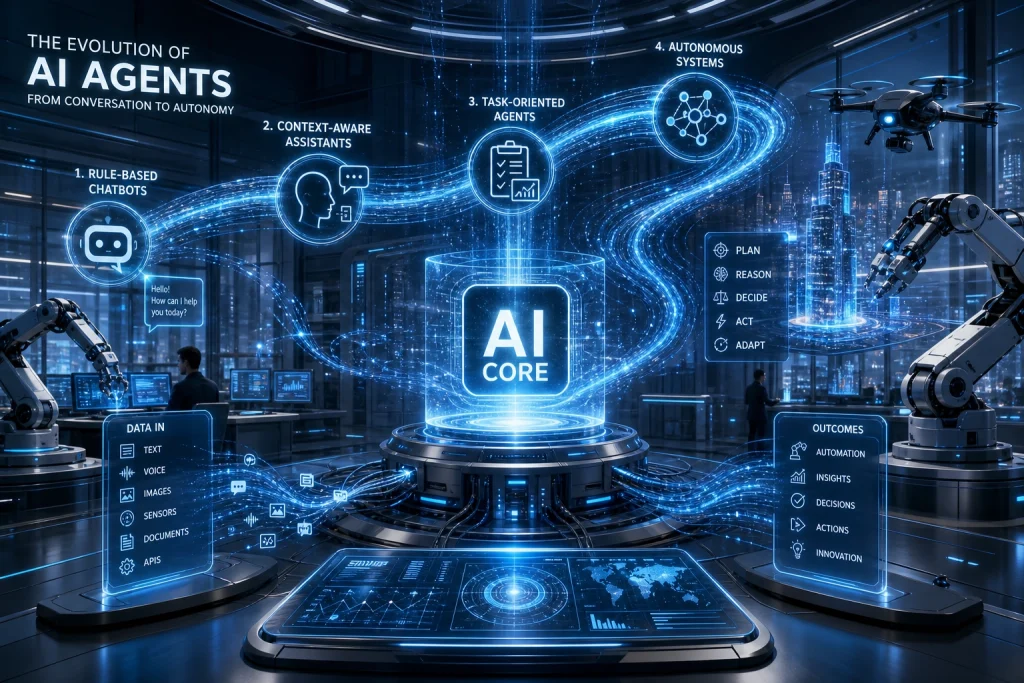
Artificial Intelligence (AI) has evolved from a niche technology to a transformative force shaping various industries. Among the most notable developments are AI agents, which range from simple chatbots to sophisticated autonomous systems. As we delve into the future of AI agents, it’s essential to understand their current capabilities, potential advancements, and the implications of their widespread adoption.
Understanding AI Agents
AI agents are software programs that use artificial intelligence to perform tasks typically requiring human intelligence. These tasks can include understanding natural language, recognizing patterns, learning from data, and making decisions. AI agents are designed to interact with humans and other systems, making them versatile tools in various applications.
The simplest form of AI agents are chatbots, which handle basic customer service inquiries, schedule appointments, and more. On the other end of the spectrum, we have autonomous systems like self-driving cars and drones, which operate with minimal human intervention.
The Evolution of Chatbots
Chatbots have become ubiquitous in customer service, providing 24/7 support and handling a multitude of inquiries simultaneously. These AI agents use natural language processing (NLP) to understand and respond to human queries. Over time, chatbots have evolved to become more sophisticated, offering:
- Personalized responses based on user history and preferences.
- Integration with various platforms like social media, email, and voice assistants.
- Contextual understanding to handle complex queries and provide relevant information.
As NLP and machine learning technologies advance, chatbots are expected to become even more adept at understanding human emotions, intentions, and providing empathetic responses.
From Automation to Autonomy
While chatbots represent the entry-level of AI agents, the development of autonomous systems signifies a more profound shift towards AI independence. Autonomous AI agents are designed to perform tasks without constant human oversight, making decisions based on real-time data and pre-defined objectives.
Examples of autonomous AI agents include:
- Self-driving cars: Capable of navigating roads, recognizing traffic signals, and avoiding obstacles.
- Drones: Used in delivery services, agriculture, and surveillance, operating with minimal human input.
- Automated trading systems: Execute trades in financial markets based on algorithms and data analysis.
The future of autonomous AI agents holds the promise of increased efficiency, reduced human error, and the ability to perform tasks in environments that are hazardous or inaccessible to humans.
The Social and Economic Impact
The widespread adoption of AI agents has significant social and economic implications. On one hand, they offer numerous benefits, such as increased productivity, cost savings, and the potential to drive innovation across sectors. On the other hand, they pose challenges, including job displacement, ethical concerns, and the need for new regulatory frameworks.
As AI agents become more prevalent, it’s crucial to address the following considerations:
- Job displacement: Preparing the workforce for new roles that AI agents create.
- Data privacy: Ensuring that AI agents handle personal data responsibly and securely.
- Ethical AI: Developing guidelines to ensure AI agents make decisions that align with societal values.
Policymakers, businesses, and society must collaborate to harness the benefits of AI agents while mitigating their potential downsides.
Conclusion
The future of AI agents is brimming with possibilities. From enhancing customer interactions through advanced chatbots to revolutionizing industries with autonomous systems, AI agents are poised to become integral to our daily lives. As we navigate this transformative landscape, it is essential to balance innovation with responsibility, ensuring that AI agents contribute positively to society and the economy.
Frequently Asked Questions (FAQ)
What are AI agents?
AI agents are software programs that perform tasks requiring human-like intelligence, such as understanding language, recognizing patterns, and making decisions. They can range from simple chatbots to complex autonomous systems.
How do AI agents impact the job market?
AI agents can lead to job displacement in certain sectors by automating routine tasks. However, they also create new opportunities by enabling roles that require oversight, management, and development of AI technologies. Workforce retraining and education will be crucial in adapting to these changes.
What are the ethical concerns associated with AI agents?
Ethical concerns include ensuring AI agents make decisions that align with societal values, maintaining data privacy, and preventing bias in AI algorithms. Developing robust guidelines and regulatory frameworks is essential to address these issues.