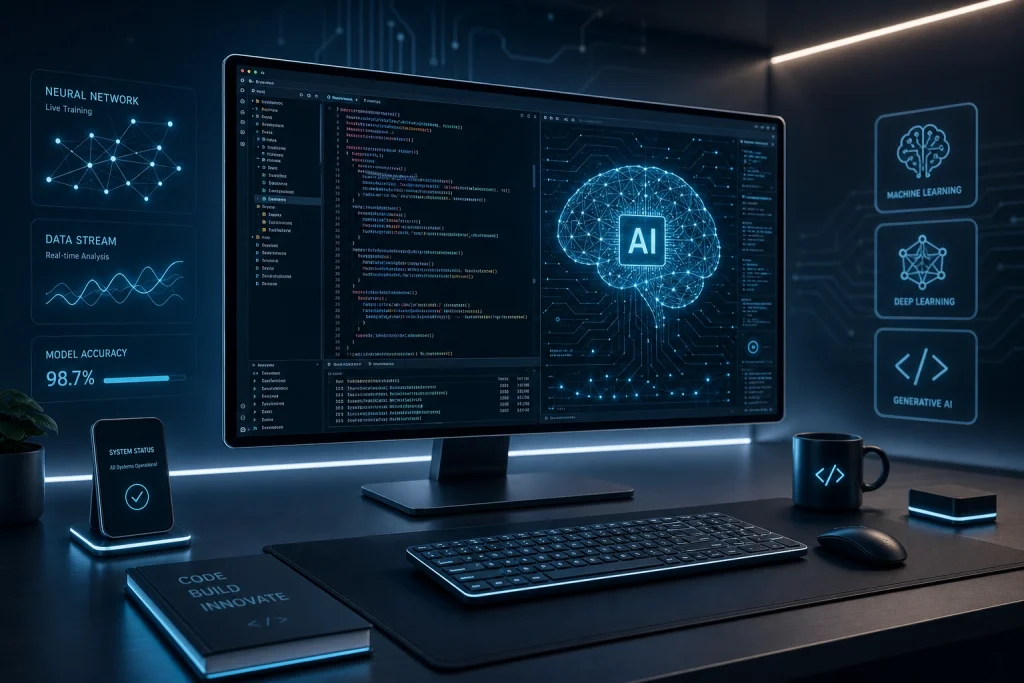
In the world of software development, efficiency and innovation are key. As the complexity of projects increases, developers are constantly on the lookout for tools that can enhance productivity and streamline workflows. Enter AI coding assistants, a new breed of technology that promises to revolutionize the way developers work. This guide explores the rise of AI coding assistants, their benefits, challenges, and how they can be integrated into the development process.
What are AI Coding Assistants?
AI coding assistants are software tools powered by artificial intelligence that aid developers in writing, debugging, and optimizing code. These tools leverage machine learning algorithms to understand the context of code and provide suggestions that can range from simple syntax corrections to complex logic improvements. They can be integrated into development environments, offering real-time assistance and insights.
Benefits of Using AI Coding Assistants
AI coding assistants offer several advantages that can significantly impact the development process. Here are some of the key benefits:
- Increased Productivity: By automating repetitive tasks and reducing the need for manual debugging, AI coding assistants allow developers to focus on more critical aspects of their projects, thereby increasing overall productivity.
- Error Reduction: These tools can catch common coding errors and suggest fixes before they become significant issues, thereby enhancing code quality.
- Enhanced Learning: For less experienced developers, AI coding assistants can serve as educational tools, offering explanations and suggestions that can help them learn best practices and improve their skills.
- Time Savings: By providing quick solutions and coding suggestions, developers can save time that would otherwise be spent searching for solutions or writing boilerplate code.
Challenges and Limitations
Despite their advantages, AI coding assistants are not without challenges. Understanding these limitations is crucial for developers who wish to integrate these tools effectively.
- Contextual Understanding: While AI coding assistants are becoming increasingly sophisticated, they may still lack the deep contextual understanding that a human developer possesses, potentially leading to incorrect suggestions.
- Dependency: Over-reliance on AI tools might lead developers to become less familiar with the intricacies of coding, potentially diminishing their problem-solving capabilities over time.
- Security Concerns: As with any AI tool, there are potential security risks, particularly if the assistant has access to sensitive codebases. Protecting intellectual property is a priority that needs careful consideration.
- Bias in Training Data: AI models are only as good as the data they are trained on. Any biases present in the training data can be reflected in the suggestions made by the assistant.
Integrating AI Coding Assistants into Your Workflow
For developers looking to incorporate AI coding assistants into their daily routines, there are several strategies to ensure a smooth integration:
- Select the Right Tool: Not all AI coding assistants are created equal. Evaluate different options based on your specific needs, programming languages, and development environments.
- Combine Human Expertise: Use AI suggestions as a guide rather than an absolute solution. Human oversight is essential to verify and adapt AI-generated code to fit the specific requirements of your project.
- Regular Updates and Feedback: AI tools are continuously evolving. Keep your tools updated and provide feedback to developers to help improve the tool’s accuracy and relevance.
- Security Practices: Implement robust security measures when using AI coding assistants, especially if they interface with proprietary code or sensitive data.
Conclusion
The rise of AI coding assistants marks a significant milestone in the evolution of software development. By enhancing productivity, reducing errors, and facilitating learning, these tools offer substantial benefits. However, they should be used judiciously with an awareness of their limitations. By balancing AI assistance with human expertise, developers can harness the full potential of these powerful tools to create more efficient, reliable, and innovative software solutions.
FAQ
What programming languages do AI coding assistants support?
AI coding assistants typically support a wide range of programming languages, including popular ones like Python, JavaScript, Java, and C++. However, support may vary between different tools, so it’s important to check the specifications of each assistant to ensure compatibility with your language of choice.
Are AI coding assistants suitable for beginners?
Yes, AI coding assistants can be very beneficial for beginners. They not only help in correcting errors and optimizing code but also serve as learning tools by providing explanations and suggesting best practices. However, beginners should ensure they understand the logic behind AI-generated suggestions to enhance their learning experience.
How can I ensure the security of my code when using AI coding assistants?
To ensure the security of your code, choose reputable AI coding assistants with strong privacy policies. Avoid sharing sensitive or proprietary information, and consider using local instances of the tool if available. Additionally, regularly update the assistant and adhere to best security practices to mitigate potential risks.