
Evolution of Social Media
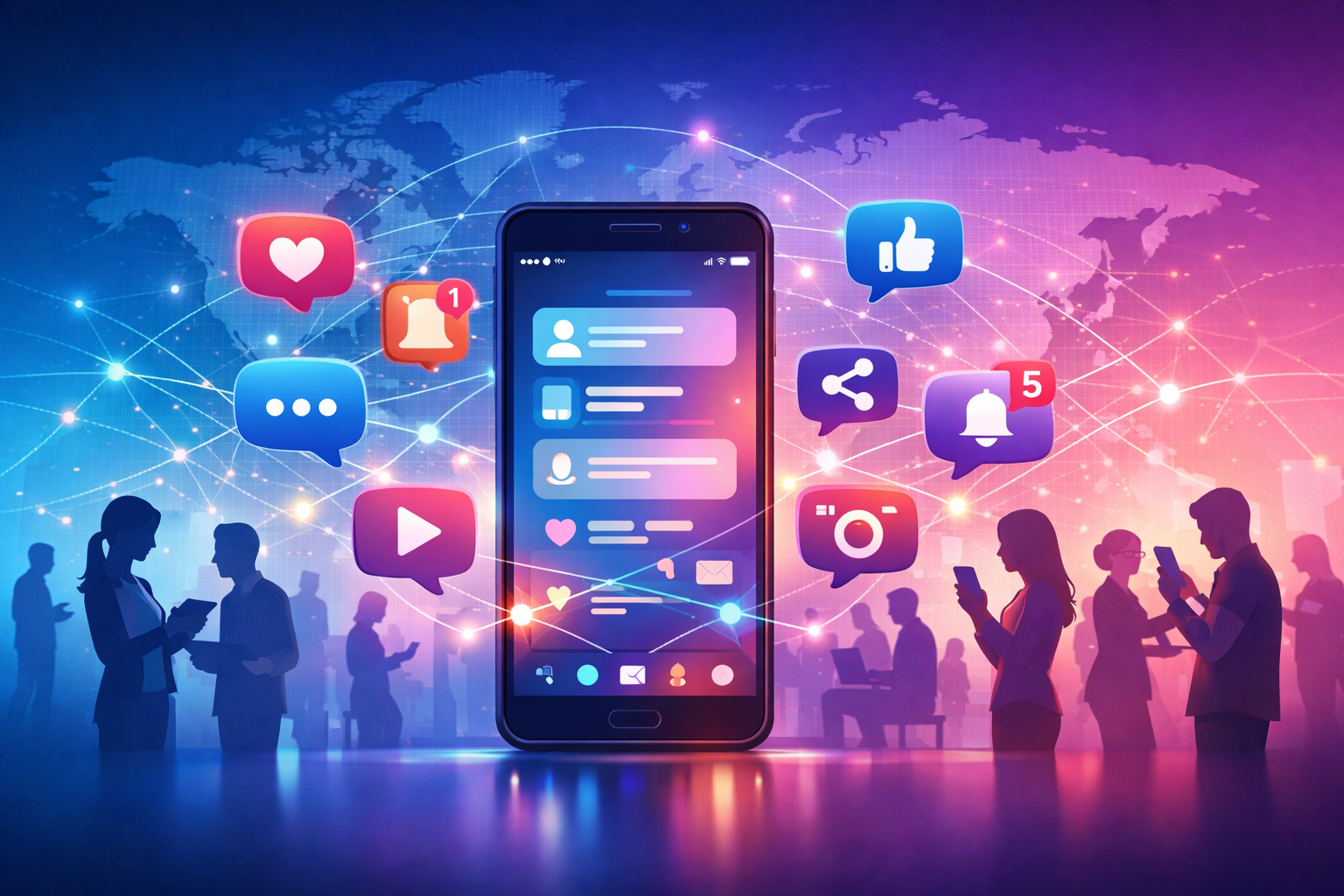
Initially, social media started as simple networking platforms where users could connect and share updates. However, it has evolved into a complex ecosystem that includes content creation, live streaming, e-commerce, and digital marketing. Platforms such as Facebook, Instagram, Twitter (X), LinkedIn, and TikTok have diversified their features to keep users engaged and provide value to businesses and creators alike.
Today, social media is not just about communication—it is about influence. Individuals can build personal brands, while companies can directly interact with their target audience without traditional intermediaries.
Role in Communication and Connectivity
One of the most significant advantages of social media is its ability to connect people across the globe instantly. It breaks geographical barriers and allows users to share ideas, experiences, and cultures in real time. Whether it’s messaging, video calls, or sharing posts, communication has become faster and more interactive.
Moreover, social media has given a voice to individuals who may not have had a platform otherwise. It enables people to express opinions, raise awareness about social issues, and participate in global conversations.
Impact on Businesses and Marketing
Social media has revolutionized the way businesses operate. Digital marketing strategies now heavily rely on platforms to reach and engage customers. Businesses can run targeted advertising campaigns, analyze audience behavior, and measure performance in real time.
Influencer marketing has also emerged as a powerful tool, where individuals with a large following promote products or services. This approach often feels more authentic and relatable compared to traditional advertisements, leading to higher engagement and conversion rates.
Additionally, small businesses and startups benefit significantly from social media, as it provides cost-effective marketing opportunities. Even with limited budgets, brands can achieve substantial reach and visibility.
Challenges and Concerns
Despite its advantages, social media comes with several challenges. Issues such as data privacy, misinformation, cyberbullying, and addiction have raised concerns worldwide. The spread of fake news can influence public opinion and create confusion, while excessive usage can impact mental health and productivity.
Another major concern is the pressure to maintain a certain online image, which can lead to stress and anxiety, especially among younger users. Therefore, responsible usage and digital awareness are crucial.
The Future of Social Media
The future of social media looks promising, with advancements in artificial intelligence, virtual reality, and augmented reality shaping the next generation of digital interaction. Features like immersive experiences, AI-driven content recommendations, and social commerce will continue to evolve.
Businesses will increasingly focus on personalized marketing, while users will demand more privacy and transparency. As technology progresses, social media will likely become even more integrated into everyday life.
Conclusion
Social media is a powerful tool that has transformed communication, business, and society. While it offers numerous benefits, it also presents challenges that require careful management. By using social media responsibly and strategically, individuals and organizations can harness its full potential and contribute positively to the digital world.
Questions readers usually ask next.
What is social media and why is it important?
Social media refers to digital platforms that allow users to create, share, and interact with content online. It is important because it enables global communication, helps businesses reach targeted audiences, and allows individuals to build personal brands and stay informed.
How does social media benefit businesses?
Social media helps businesses increase brand awareness, engage directly with customers, and run cost-effective marketing campaigns. It also provides analytics tools to track performance, understand audience behavior, and improve strategies for better results.
What are the risks of using social media?
Some common risks include data privacy concerns, exposure to misinformation, cyberbullying, and excessive usage that can affect mental health. Practicing mindful usage and verifying information can help reduce these risks.
Discussion
Discussion
Comments should follow a moderation-first workflow. Nothing goes public until an admin reviews and approves it.